
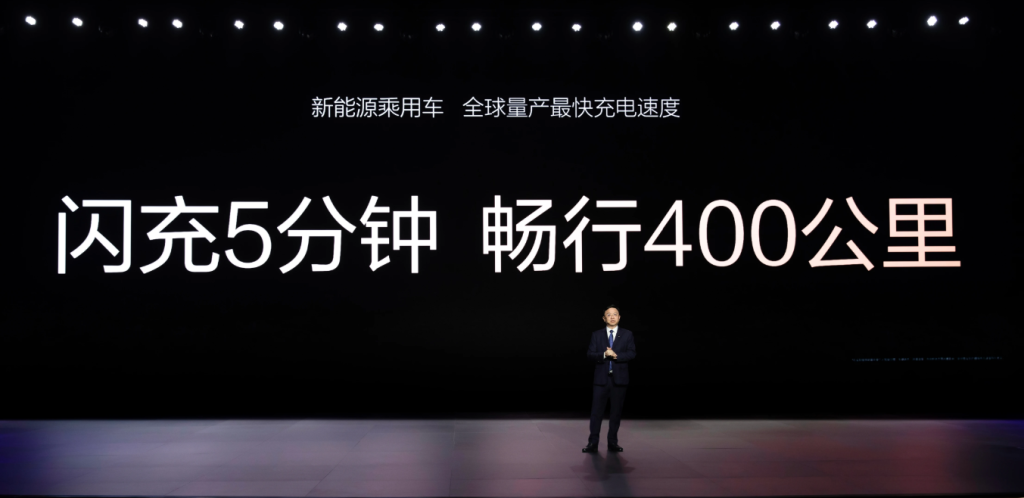
Chinese electric vehicle company BYD Zhao has released watt flash charging technology, which only takes 9 minutes to charge and can have a range of 400 kilometers.
This latest technology has solved the problem of range anxiety in electric vehicles, and in the future, more consumers will purchase electric vehicles. The upstream and downstream enterprises of electric vehicles will also have greater development opportunities
The year 2026 marks a watershed moment in the electric vehicle (EV) industry, with Chinese
automakers led by BYD launching megawatt-level flash charging technology that achieves “charging
speeds comparable to refueling.” This comprehensive analysis examines the technological
breakthrough, its current application status, and the profound impact on the automotive manufacturing
ecosystem. The technology represents not merely a parameter upgrade but a systemic redefinition of
electric mobility infrastructure, with implications spanning production processes, supply chain dynamics,
market competition, consumer behavior, and industry standards
1. Technological Overview: The Megawatt Flash Charging
Revolution
1.1 Core Technological Principles
Megawatt flash charging technology represents a fundamental breakthrough in electric vehicle energy
replenishment systems. Unlike conventional fast charging that typically operates at 60-180kW power
levels, this new generation achieves charging power exceeding 1MW (1000kW), enabled by three coretechnological pillars:
First: Full-Domain 1000V High-Voltage Architecture
The foundation of megawatt charging lies in a comprehensive voltage platform upgrade across all
vehicle electrical systems. Unlike industry-standard 400V or emerging 800V platforms, this native
1000V architecture upgrades battery systems, electric motors, power control units, air conditioning
systems, and PTC heaters to 1000V withstand voltage specifications. This eliminates the need for
independent DC/DC boost converters used in traditional high-voltage platforms, reducing power
conversion losses from 8-15% to less than 1%, achieving 99% power transfer efficiency from charging
station to battery pack.
The key breakthrough stems from indigenously developed 1500V silicon carbide (SiC) power modules.
While traditional silicon-based IGBT power devices have reached performance limits under high current
conditions, these SiC modules achieve 70% lower switching losses and can operate stably at 1500A
1/17current in extreme environments ranging from -40°C to 175°C. This technological capability represents
the industry’s first mass-produced application of 1500V automotive-grade SiC power modules.
Second: Second-Generation Blade Battery Technology
The core innovation enabling flash charging lies in battery chemistry and structure advancement. The
second-generation blade battery creates “ultra-high-speed ion channels” through material system
reconstruction:
Positive Electrode
: Nanoscale coated lithium manganese iron phosphate (LMFP) material, featuring a
voltage platform elevated from 3.2V to 3.7-3.8V, improving lithium-ion extraction efficiency by 40% and
significantly reducing interface impedance
Electrolyte
: Customized low-viscosity formulation enhancing lithium-ion mobility, reducing transmission
resistance in the electrolyte by 50%
Negative Electrode: Nanoscale silicon-carbon composite materials with 10 times the lithium-ion
embedding capacity of traditional graphite anodes, employing porous structure design to shorten
lithium-ion diffusion paths and eliminate lithium precipitation under high-current charging
These innovations reduce internal resistance by 50%, supporting 10C continuous charging rates.
Laboratory testing demonstrates the ability to charge from 10% to 97% state of charge (SOC) in just 9
minutes, representing the fastest charging speed among mass-produced lithium iron phosphate
batteries globally.
Third: Intelligent Thermal Management System
High-current charging generates substantial heat, potentially triggering thermal runaway if unmanaged.
The system employs a three-dimensional thermal control architecture with 96 high-precision
temperature monitoring points achieving millisecond-level temperature acquisition, maintaining cell
temperature differentials within ±2°C. The direct cooling liquid structure enables cooling liquid to directly
contact large cell surface areas, increasing heat dissipation efficiency by 300%. Even at -30°C extreme
low temperatures, charging time increases by only 3 minutes compared to ambient conditions,
effectively resolving the challenge of poor low-temperature charging performance for lithium iron
phosp
1.2 Technical Parameters and Performance Metrics
The megawatt flash charging system demonstrates industry-leading performance metrics:
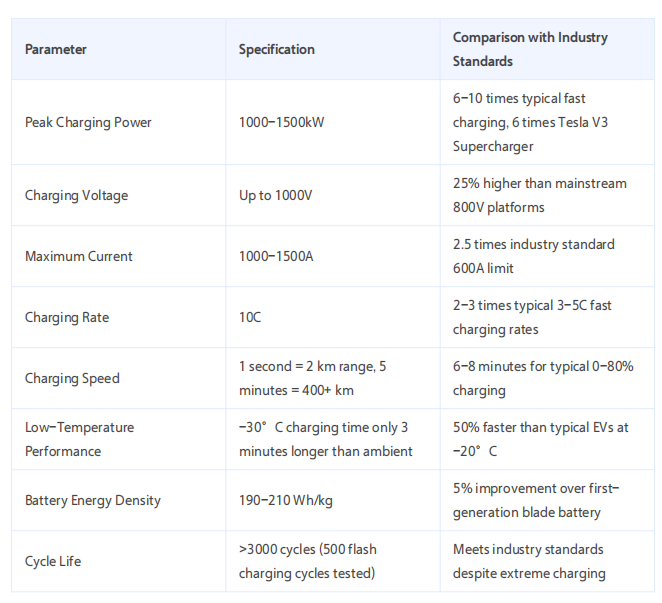
Real-world testing data reveals exceptional performance: under ambient conditions, charging from 10%to 70% SOC requires only 5 minutes (adding approximately 400km range), while 10% to 97% SOCcompletes in 9 minutes. At – 30°C extreme temperatures, charging from 20% to 97% SOC takes only 12minutes, merely 3 minutes longer than ambient conditions-shattering the conventional wisdom thatlithium iron phosphate batteries “fear cold.”
1.3 R&D Background and Development Timeline
The development of megawatt flash charging technology represents the culmination of nearly two
decades of technological accumulation and strategic planning:
2006-2019: Technical Foundation and Patent Layout
BYD’s vision for high-power charging can be traced back to patent applications filed in 2006, which
proposed a “grid-energy storage-charging” integrated architecture to address megawatt-level charging’s
2006-2019: Technical Foundation and Patent Layout
BYD’s vision for high-power charging can be traced back to patent applications filed in 2006, which proposed a “grid-energy storage-charging” integrated architecture to address megawatt-level charging’s impact on the power grid through energy storage system peak shaving. This conceptual framework laid the foundation for later megawatt flash charging implementation.
2020-2024: Platform Upgrade and Technical Breakthrough
With the popularization of 800V high-voltage platforms in passenger vehicles (e.g., XPeng G9, NIO ET5), the industry began exploring higher-power charging technologies. BYD integrated battery, motor, and electronic control core components to launch the “Super e Platform,” upgrading battery, motor, and power systems to 1000V high voltage, creating the technical foundation for megawatt charging’s “voltage breakthrough.”
In 2024, BYD released 10C flash charging battery (peak charging rate 10C), combined with 1000V highvoltage platform, achieving a laboratory breakthrough of “5-minute charging for 400km range,” marking megawatt flash charging technology’s transition from “theory” to “practice.” CATL, Huawei, and other companies began the layout of high-rate batteries (e.g., CATL’s second-generation Shenxing ultra-fast charging battery) and high-voltage charging equipment (e.g., Huawei’s 1500kW commercial vehicle ultra-fast charging system), forming industry consensus on megawatt charging.
2025-2026: Mass Production and Ecosystem Deployment
2025 became the “inaugural year of megawatt flash charging” with mass production of BYD’s Super e Platform. The year witnessed four major breakthroughs:
- Technical Breakthrough: Upgrade from “800V” to “1000V” with power scaling to megawatt level
- Mass Production Landing: Transition from “laboratory” to “market” with simultaneous vehicle and charging station deployment
- Industry Impact: Transition from “charging anxiety” to “fuel-electric speed equivalence,” reshaping market structure
- 2026 Globalization: International expansion with unified standards
1.4 Current Application Status
Market Penetration and Vehicle Integration
As of March 2026, megawatt flash charging technology has achieved commercial deployment across multiple vehicle models and price segments:
- Flagship Models: BYD Han L EV (priced 270,000-350,000 RMB), Tang L EV (280,000-360,000 RMB) as the first batch of mass-produced vehicles carrying the technology
- Mainstream Market: Song Ultra EV positioned at 155,000 RMB starting price, standard-equipped with megawatt flash charging technology and second-generation blade battery, demonstrating technology penetration into the mainstream B-segment SUV market
- Luxury Segment: Denza Z9 GT achieving 1,036km CLTC range through super e Platform
- Brand Coverage: Technology deployed across BYD’s five major brands-Dynasty, Ocean, Denza, Fangchengbao, and Yangwang-spanning price points from 150,000 RMB to 1.3 million RMB
This comprehensive coverage strategy ensures technology accessibility across different consumer segments, breaking the industry convention where cutting-edge technologies remain exclusive to highend luxury models.
Infrastructure Deployment
Infrastructure deployment has accelerated rapidly through innovative partnership models:
- Strategic Objectives: “Flash Charging China” initiative targets 20,000 flash charging stations by end of 2026, comprising 18,000 urban “station-in-station” locations and 2,000 highway flash charging stations
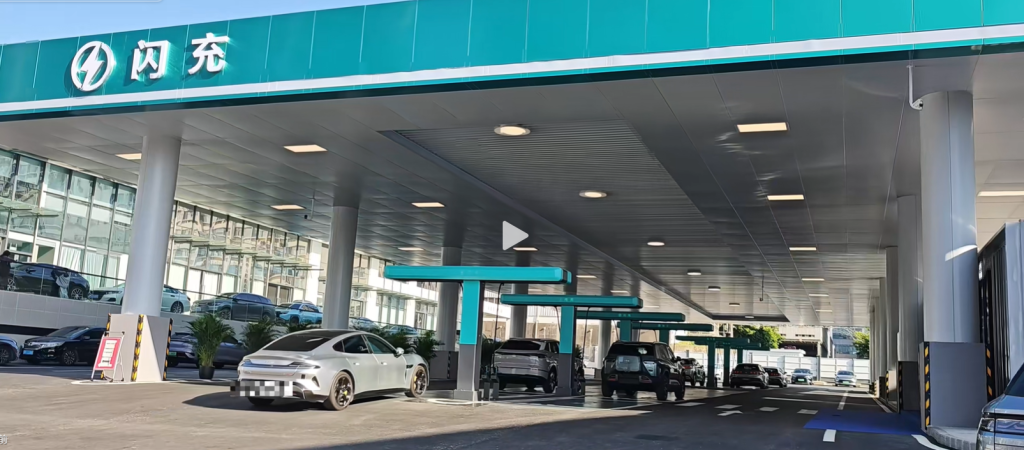
- Current Progress: As of mid-March 2026, 4,597 flash charging stations have been completed covering 279 cities, with 358 new stations added weekly
- Cooperation Model: Partnerships with Xiaoju Charging (10,000 flash charging stations) and Xindiantu (5,000 flash charging stations) leveraging existing charging operator infrastructure through “station-instation” conversion
- Global Expansion: Plans for initial deployment of 200-300 flash charging stations in Europe during 2026, adapted to Denza brand specifications, with cooperation with local grid companies promoting “energy storage + grid” model internationalization
Charging Terminal Specifications
The dedicated flash charging infrastructure features innovative design solutions:
- Peak Power: Single gun output up to 1500kW (BYD V4 extreme charging stations reaching 1440kW dualgun combined power)
- Storage Integration: Built-in energy storage systems (maximum charging power 800kW with grid supply as low as 200kW) eliminating dependence on large-scale power grid upgrades
- User Experience: World-first “sliding suspension T-type post” design with 2kg lightweight liquid-cooled charging gun line enabling single-handed operation
- Universal Compatibility: Support for 200V-1000V wide voltage platforms compatible with most highvoltage EV models on the market
The “storage-charge integration” architecture represents a critical breakthrough, allowing megawattlevel charging deployment in areas with limited grid capacity. Charging stations store energy during lowdemand periods and release during peak charging, stabilizing output power while eliminating grid impact-simultaneously ensuring safety and reducing deployment costs.
2. Industry Impact Analysis: Transformative Effects on Automotive Manufacturing

2.1 Production Manufacturing Implications
Production Line Adaptation and Process Innovation
Megawatt flash charging technology necessitates fundamental restructuring of EV production lines, particularly in high-voltage system manufacturing:
- High-Voltage Component Production: 1000V components require advanced insulation materials and stricter quality control processes compared to conventional 400V/800V systems. Production lines for power cables, connectors, and distribution boxes must incorporate enhanced safety protocols and precision assembly equipment.
- Battery Manufacturing Processes: 10C charging capability demands precision electrode manufacturing with nanoscale material coating consistency. Second-generation blade battery production requires upgraded electrode coating precision (nanoscale control), improved separator quality control, and advanced cell formation processes to meet high-current discharge standards.
- Thermal Management System Integration: The 96-point temperature monitoring system requires advanced sensor integration during battery pack assembly, with automated calibration and testing procedures to ensure uniform temperature distribution performance.
- High-Power Charging Port Manufacturing: Charging interfaces designed for 1500A current transmission require reinforced contact materials and heat dissipation structures, necessitating new production tooling and testing equipment.
Industry investment data indicates that upgrading a standard 400V EV production line to support 1000V megawatt charging capability requires approximately 15-25% additional capital investment, primarily in high-voltage component manufacturing equipment and testing infrastructure. However, the standardized nature of blade battery production enables economies of scale, with BYD’s Jinan battery manufacturing base achieving integrated battery and vehicle production for rapid technology iteration.
Battery Manufacturing Technology Revolution
The core manufacturing challenges center on second-generation blade battery production:
- Material Processing: Nano-level control in positive electrode LMFP material coating, silicon-carbon negative electrode composite manufacturing, and low-viscosity electrolyte formulation require advanced material processing equipment with micron-level precision
- Cell Assembly: High-speed automated electrode stacking precision maintained within 0.1mm tolerance, ultrasonic welding reliability for multi-tab current collectors meeting 1500A continuous current requirements
- Pack Assembly: 96-channel temperature sensor integration with automated calibration, direct cooling channel assembly requiring leak-proof sealing performance validation, high-current busbar assembly with torque-controlled tightening systems
- Testing Infrastructure: Enhanced cycle life testing capable of validating 3000+ cycle performance under 10C charging conditions, thermal runaway testing under high-current charging scenarios, and -30°C low-temperature performance validation chambers
Manufacturing yield improvements have been substantial through technology refinement, with blade battery production yields reaching industry-leading levels despite the increased technical complexity. The vertical integration advantage-spanning from material synthesis through cell manufacturing to pack assembly-enables quality control and cost optimization across the entire value chain.
Supply Chain Restructuring and Strategic Dependencies
The megawatt flash charging ecosystem drives supply chain evolution across multiple dimensions:
- High-Voltage Components: Demand surge for 1500V SiC power modules, with BYD’s semiconductor division achieving full-stack self-production including chip design, manufacturing, packaging, and testing. This vertical integration eliminates dependence on international suppliers and ensures supply chain security.
- Advanced Materials: Lithium manganese iron phosphate cathode materials with nano-coating technology, silicon-carbon composite anode materials, and specialized electrolytes require dedicated supplier relationships and quality assurance systems. The industry is witnessing capacity expansion across these specialized material segments.
- Thermal Management Components: High-performance liquid cooling plates, precision temperature sensors, and thermal interface materials demand advanced manufacturing capabilities. The direct cooling structure requires specialized aluminum alloy materials and precision machining capabilities.
- Charging Infrastructure Components: 1500kW power modules, high-current liquid-cooled charging gun lines, and energy storage systems necessitate new supplier development and quality standards. The storage-charge integration design creates demand for large-capacity energy storage battery systems.
The supply chain impact extends beyond immediate components to create new industry segments. The “station-in-station” conversion model, for example, creates opportunities for retrofitting existing charging infrastructure with megawatt-capable components, generating demand for upgrade kits and conversion services.
2.2 R&D Direction and Technology Roadmap Guidance
Industry Technology Route Convergence
Megawatt flash charging is driving industry-wide convergence toward high-voltage, high-rate charging solutions:
- Voltage Platform Evolution: Industry-wide transition from 400V to 800V and now to 1000V platforms. Major automakers including XPeng, Li Auto, and Zeekr have accelerated 800V platform development, though BYD’s 1000V architecture maintains a generational advantage.
- Battery Technology Competition: Intensified focus on high-rate battery development with CATL releasing second-generation Shenxing ultra-fast charging battery (supporting 12C peak charging), and GAC Group launching Shield Golden Brick Battery with claims of 10%-80% charging in 10 minutes for hybrid batteries.
- Power Semiconductor Competition: SiC technology becoming mainstream with 1500V devices emerging as industry standard. The power semiconductor industry is witnessing capacity expansion toward higher voltage and current capability devices.
- Thermal Management Innovation: Active thermal management becoming standard with liquid cooling systems evolving toward direct cooling implementations. The integration of thermal management with battery management systems (BMS) creates new R&D synergies.
The technology roadmap extends beyond current implementations, with research underway on 1500V platform vehicles potentially achieving charging power exceeding 1500kW. This continuous evolution suggests that megawatt charging represents the beginning rather than the end of charging speed innovation.
R&D Investment Focus and Priority Shifts
Industry R&D investment patterns are shifting in response to megawatt charging demands:
- Battery Chemistry: Investment focus on materials enabling fast ion transport including cathode materials with optimized crystal structures, anode materials with minimal lithium plating risk, and electrolytes with low resistance and high thermal stability.
- High-Voltage Architecture: R&D on 1000V+ electrical architecture including insulation material development, arc suppression techniques, and high-voltage safety systems.
- Thermal Management: Advanced cooling technologies including phase change materials, immersive cooling systems, and predictive thermal management algorithms using artificial intelligence.
- Grid Integration: Vehicle-to-grid (V2G) technology development enabling EVs to serve as distributed energy storage resources, with megawatt charging stations acting as grid stabilization nodes.
Corporate R&D expenditure data indicates a significant reallocation toward high-voltage and high-rate charging technologies. BYD’s R&D investment exceeded 30 billion RMB in 2025, with approximately 35% dedicated to charging and battery technology advancement. Other major Chinese automakers have similarly increased R&D investment in these areas.
Testing and Validation Requirements
The extreme performance parameters necessitate enhanced testing and validation protocols:
- Durability Testing: 3000+ cycle validation under 10C charging conditions, compared to standard 1000cycle testing for conventional EVs. This requires accelerated testing equipment and statistical analysis methodologies.
- Safety Testing: Enhanced validation including 500-flash-charge-cycle needle penetration testing without thermal runaway, 1200J bottom metal sphere impact testing, 70km/h vehicle underbody scraping tests, and 400kN multi-point crushing tests-exceeding new national standards.
- Environmental Testing: Low-temperature performance validation at -30°C with repeated charging cycles, high-temperature operation at 60°C, and humidity cycling testing to ensure reliability across climate conditions.
- Grid Interaction Testing: Validation of storage-charge integration performance under varying grid conditions, including voltage fluctuation tolerance and response to grid frequency regulation requirements.
These enhanced testing requirements create demand for advanced testing infrastructure and influence new product development timelines, potentially extending development cycles but significantly improving product reliability and performance.
2.3 Market Competition Landscape Transformation
Competitive Advantage Redefinition
Megawatt flash charging fundamentally redefines competitive advantages in the EV market:
- Time-to-Range Advantage: 5-minute charging for 400km range eliminates the core disadvantage compared to internal combustion vehicles. This transforms the competitive calculus from range anxiety to charging convenience.
- Network Effect Dynamics: The planned 20,000 flash charging stations create network effects-the larger the user base, the more valuable the network becomes. This creates first-mover advantages for infrastructure deployment.
- Technology Barrier Creation: The full-stack self-research capability spanning batteries, high-voltage platforms, and charging infrastructure creates substantial barriers to entry. Lacking comprehensive technology integration, second-tier automakers face technical obsolescence risks.
- Ecosystem Competition: Competition shifts from individual vehicle performance to integrated ecosystems including charging infrastructure, battery warranty policies, and user service experiences.
The market impact is already visible. BYD’s market share in China’s NEV market exceeded 30% in 2025, with megawatt flash charging serving as a key differentiator in the premium segment. The technology inclusive strategy, extending flash charging to 150,000 RMB price points, expands market penetration beyond premium segments.
Impact on Existing Business Models
The technology threatens existing business models across the industry:
- Battery Swapping Model Challenges: NIO’s fourth-generation battery swapping stations maintain a 2minute 24-second complete swap record, but the 5-9 minute flash charging narrows the convenience gap significantly. During holiday peak periods when waiting times dominate total service time, flash charging’s higher station turnover efficiency may actually reduce total waiting time compared to battery swapping.
- Subscription Model Re-evaluation: Battery-as-a-Service (BaaS) business models face pressure as 3000+ cycle life with lifetime warranty reduces battery degradation concerns. The value proposition of battery leasing diminishes when battery longevity becomes guaranteed.
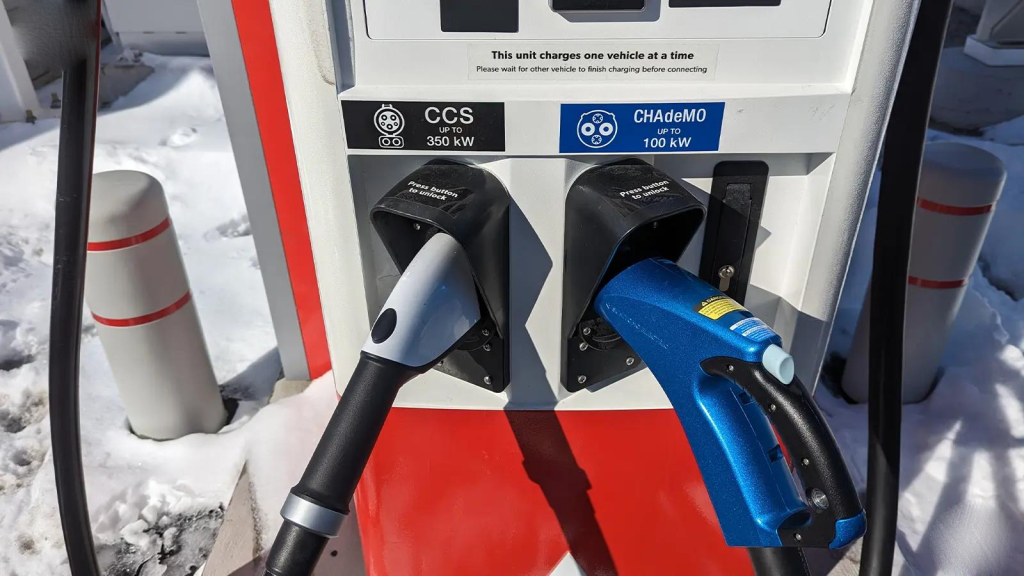
- Third-Party Charging Operator Disruption: Traditional charging operators with 120-180kW power infrastructure face accelerated obsolescence. The 1500kW flash charging capability represents a 10-fold performance gap, threatening existing business models without infrastructure upgrades.
- Premium Brand Positioning Impact: Premium automotive brands that previously differentiated through “supercharging” networks face competition from open-access flash charging infrastructure with superior technical specifications.
Market analysis suggests a potential “80:20” division in the charging market by 2027, with megawatt flash charging serving 80% of private vehicle users while battery swapping focuses on operational vehicles (ride-hailing, taxis, heavy trucks) and premium niche markets.
Strategic Response from Competitors
Industry competitors are responding with various strategies:
- Technology Catch-up: XPeng, Li Auto, and Zeekr accelerating 800V+5C roadmaps but still maintaining a generational gap compared to BYD’s 1000V+10C technology. These competitors face the challenge of significant platform redesign to match megawatt charging capability.
- Strategic Partnerships: GAC Group forming alliances with Huawei and other technology companies to develop open technology platforms, pursuing differentiation in intelligent connectivity rather than charging performance alone.
- International Positioning: Global automakers including Volkswagen, Toyota, and GM still iterating through 400V-800V platforms, with battery and thermal management capabilities lagging Chinese manufacturers. This creates an accelerating gap between Chinese and international EV capabilities.
- Value Proposition Evolution: Premium brands emphasizing service differentiation, ownership experience, and brand heritage to offset technological disadvantages in charging performance.
The competitive dynamics suggest increasing market concentration, with automakers possessing vertical integration capabilities gaining market share while those relying on external suppliers face margin pressure and potential market share erosion.
2.4 Consumer Behavior and Purchase Decision Impact
Eliminating Range Anxiety and Redefining Usage Patterns
Megawatt flash charging fundamentally addresses consumer anxiety through practical performance improvements:
- Daily Use Patterns: 5-minute charging for 400km range enables weekly charging sufficient for typical daily commuting of 50-100km. This transforms EV ownership from planning-intensive to conveniencefocused usage.
- Long-Distance Travel: Service area stops of 5-10 minutes enable 400-800km range replenishment, making long-distance travel comparable to or faster than refueling stops for internal combustion vehicles. Travel planning becomes flexible rather than constrained.
- Low-Temperature Confidence: -30°C charging performance within 3 minutes of ambient conditions eliminates seasonal usage restrictions, particularly important for consumers in northern regions previously deterred by cold weather performance concerns.
Consumer research indicates that 70% of potential EV buyers cite charging convenience as a primary consideration, with 5-minute flash charging addressing this concern more effectively than 700km+ range capabilities. The “fast energy replenishment” capability is replacing “long range” as the primary purchase consideration among informed consumers.
Vehicle Purchase Decision Factors Evolution
The technology is reshaping vehicle purchase decision priorities:
- Battery Size Optimization: Reduced emphasis on large battery packs when fast charging is readily available. Vehicles can be lighter, more efficient, and less expensive with smaller battery packs optimized for daily use rather than occasional long-distance trips.
- Vehicle Segmentation Impact: Performance previously limited to premium vehicles becomes accessible in mainstream segments. BYD’s 150,000 RMB vehicles offering the same flash charging capability as million-RMB premium vehicles democratizes advanced technology.
- Resale Value Considerations: Battery degradation concerns addressed by 3000+ cycle life validation and lifetime warranty policies. Flash charging capability may actually enhance resale value as charging infrastructure expands.
- Total Cost of Ownership: Lower initial vehicle cost through optimized battery sizing, combined with reduced charging time convenience, improves total cost of ownership calculations relative to both internal combustion vehicles and earlier EV generations.
Market data suggests significant consumer behavior shifts. Pre-orders for flash charging-equipped models exceeded projections by 40-60%, with particularly strong interest in price segments below 250,000 RMB where advanced technology was previously inaccessible.
Charging Behavior and Lifestyle Integration
The convenience of megawatt charging enables new usage patterns:
- Spontaneous Charging: Reduced need for route planning and charging reservation. Charging becomes opportunistic rather than scheduled, similar to refueling habits for internal combustion vehicles.
- Time Valuation: With 5-minute charging for 400km range, the opportunity cost of charging becomes negligible compared to traditional 30-60 minute charging sessions. This aligns EV usage with busy professional lifestyles.
- Home Charging Substitution: Public flash charging may partially substitute for home charging installations, particularly in urban settings where home charging infrastructure is unavailable or expensive.
- Cross-Regional Travel: Improved long-distance travel capability enables spontaneous cross-region tourism and business travel, addressing a significant barrier for EV adoption in markets with limited regional EV penetration.
Consumer surveys indicate that 85% of existing EV owners would prioritize flash charging capability for their next vehicle purchase, with 60% willing to pay a 5-10% premium for vehicles equipped with the technology.
2.5 Policy and Standards Development Impact
National Standard Evolution and International Influence
The rapid deployment of megawatt flash charging is driving policy and standards development:
- National Standards Formulation: The Ministry of Industry and Information Technology is promoting the formulation of national recommended standards for megawatt-level charging interfaces, communication protocols, and safety requirements based on BYD’s implementation experience.
- ChaoJi Standard Promotion: The ChaoJi charging interface standard, originated in China, is gaining international recognition with megawatt flash charging providing practical validation for high-power charging applications.
- Grid Integration Standards: New standards emerging for storage-charge integration systems addressing grid protection, energy storage safety, and grid interaction protocols. These standards are likely to influence international best practices.
- Low-Temperature Performance Requirements: Enhanced standards for EV performance under extreme conditions, particularly addressing cold climate charging capabilities previously considered secondary requirements.
China is positioned to lead international standard-setting for high-power charging, with domestic implementation providing technical validation for international standards adoption. This leadership creates strategic advantages for Chinese EV manufacturers expanding into global markets.
Infrastructure Policy Support and Incentive Development
Government policies are evolving to support megawatt charging infrastructure:
- Grid Upgrades: Planned investments in grid infrastructure to support high-power charging deployment, particularly in highway service areas and urban centers. Government-industry collaboration initiatives target 20,000+ high-power charging stations by 2026.
- Land Use and Permitting: Streamlined approval processes for storage-charge integration stations, particularly for “station-in-station” conversion projects that leverage existing infrastructure.
- Financial Incentives: Potential subsidies for megawatt charging station deployment, particularly in underserved regions and highway corridors. Tax incentives for charging infrastructure investment under development.
- Standardization Requirements: Pending regulations requiring high-power charging capability in new vehicle models beyond certain date, potentially as early as 2027 for new vehicle launches.
The policy environment creates significant first-mover advantages for manufacturers with existing megawatt charging capabilities, while creating compliance challenges for slower-moving competitors.
International Trade and Technology Transfer Considerations
The technology has implications for international trade dynamics:
- Export Market Expansion: Chinese EV manufacturers gain competitive advantages in international markets with high-power charging infrastructure development. European and Southeast Asian markets represent key expansion targets.
- Technology Licensing: Potential for licensing megawatt charging technology to international manufacturers lacking equivalent capabilities, creating new revenue streams beyond vehicle sales.
- Standard Setting Influence: Leadership in high-power charging standards provides commercial advantages in global markets, potentially creating de facto standards favoring Chinese technology implementations.
- Supply Chain Localization: Pressure for supply chain localization in international markets may create technology transfer requirements or joint venture opportunities.
The geopolitical implications are significant, with megawatt charging potentially accelerating the transition to electric mobility in ways that favor Chinese manufacturing and technology capabilities.
3. Future Outlook and Strategic Implications
3.1 Technology Evolution Trajectory
The current megawatt flash charging implementation represents the foundation for continued innovation:
- 1500V Platform Development: Research underway on 1500V vehicle platforms potentially achieving 1500kW+ charging power, representing another technological generational leap.
- Solid-State Battery Integration: Solid-state battery technology may enable even higher charging rates with improved safety characteristics, potentially reaching 15-20C charging rates.
- Vehicle-to-Grid Integration: Enhanced V2G capabilities enabling EVs to serve as grid storage resources, with megawatt charging stations serving as grid stabilization nodes.
- Autonomous Charging Integration: Fully automated charging systems enabling autonomous vehicle charging without human intervention, essential for robotaxi and autonomous commercial vehicle operations.
The technological trajectory suggests continued acceleration of charging capabilities, with potential for 2-minute charging for 400km range within the next 5-7 years assuming continued material science breakthroughs.
3.2 Market Evolution Predictions
Based on current deployment patterns and technology trajectories, several market developments are likely:
- Infrastructure Density: Target of 20,000 megawatt charging stations by 2026 represents the foundation, with potential expansion to 50,000+ stations by 2028 to achieve truly ubiquitous coverage.
- Technology Adoption: Rapid adoption across price segments, with megawatt charging becoming standard expectation rather than premium feature by 2027-2028.
- Market Consolidation: Increasing concentration among manufacturers with vertical integration capabilities, with potential for smaller manufacturers to exit or seek partnership arrangements.
- International Expansion: Aggressive international expansion, particularly in Europe and Southeast Asia, where grid infrastructure can accommodate high-power charging deployment.
Market analysis suggests that megawatt charging could accelerate China’s NEV market penetration from current 55-60% to 80%+ by 2030, representing near-complete market transition to electric mobility.
3.3 Strategic Recommendations for Industry Participants
For Automakers:
- Prioritize vertical integration capabilities, particularly in battery technology and power electronics
- Accelerate platform upgrades to 1000V+ architecture to maintain competitiveness
- Develop comprehensive charging infrastructure strategies including partnerships and standards development
- Consider technology licensing as potential revenue stream for international market expansion
For Component Suppliers:
- Invest in 1500V+ component development, particularly SiC power modules and high-voltage connectors
- Develop enhanced testing and validation capabilities for high-power applications
- Pursue strategic partnerships with technology leaders for early access to emerging requirements
- Consider international expansion aligned with Chinese EV manufacturer global expansion strategies
For Infrastructure Operators:
- Accelerate infrastructure upgrades to megawatt-capable systems to avoid obsolescence
- Develop storage-charge integration capabilities to enable rapid deployment
- Pursue partnership opportunities with technology leaders for early access to equipment and standards
- Consider business model innovations including subscription services and value-added energy services
For Policymakers:
- Accelerate standards development for high-power charging to facilitate market development
- Develop grid upgrade strategies to support anticipated demand growth
- Consider targeted incentives for rapid deployment in underserved regions
- Support international standard harmonization to facilitate technology export and market expansion
4. Conclusion
The deployment of megawatt flash charging technology by Chinese electric vehicle companies represents not merely an incremental improvement but a fundamental redefinition of electric mobility possibilities. This technological breakthrough addresses the last significant barrier to mass EV adoption -charging convenience-while creating new competitive dynamics across the automotive industry ecosystem.
The impact extends far beyond charging speed to influence production processes, supply chain structure, market competition, consumer behavior, and international standards development. The comprehensive ecosystem approach, integrating vehicle technology, battery chemistry, and charging infrastructure, creates substantial competitive barriers for manufacturers lacking vertical integration capabilities.
For international markets and manufacturers, Chinese megawatt flash charging technology represents both a competitive challenge and an opportunity for collaboration. The technology demonstrates China’s emergence as technology leader rather than follower in automotive electrification, with implications for global market dynamics and industrial competitiveness.
As the technology matures and infrastructure deployment accelerates, the electric vehicle industry will witness accelerated transition from fossil fuel to electric power, with Chinese manufacturers wellpositioned to lead this transformation globally. The next 5-10 years will determine whether current firstmover advantages translate into sustained global leadership in automotive technology and market share.
The megawatt flash charging revolution is underway, and its impact on the automotive manufacturing industry will be profound and lasting. Industry participants across the value chain must adapt to this new reality or risk obsolescence in an increasingly technology-intensive and rapidly evolving market environment.
- What? Does it only take 10 minutes to charge an electric car? China’s tram megawatt flash charging technology
- How to achieve aerospace-grade precision in consumer-priced Optimus parts?
- What is the best surface finish for robotic tactile sensor mounts?
- Why did German Chancellor Merz visit Chinese company Yushu Technology, a humanoid robot company?
- Humanoid Robot:How long does it take to transition from 3D-printed prototypes to CNC-machined production?

 German
  English
  French
  Italian
  Spanish
  Portuguese
  Russian
  Arabic
  Japanese