
Discover how our CNC machining expertise and collaborative spirit accelerated a startup’s journey to becoming a global humanoid robot leader—proving that Chinese tech innovation thrives on synergy.
case
- Company: Our CNC Machining Co., Ltd. | Client: Company A , Project: Core Components for H-Series Humanoid Robots
- Location: Shenzhen, China (Global Manufacturing Hub)
- Technology: 5-axis CNC machining, high-precision milling, turning, micro-machining
- Material: Aluminum 6061-T6, Titanium alloy Ti-6Al-4V, Carbon-fiber reinforced polymer (CFRP)
- Surface Finish: Anodizing (clear/black), sandblasting, precision polishing
- Product: Core components for humanoid robots (joint actuators, transmission gears, structural frames)
- Timeline: 5 years (from startup to industry leader)
- Industria: Advanced manufacturing / robotics / high-tech medical & industrial equipment
- ¿Porque nosotros?: Instant quote platform, DFM (Design for Manufacturability) guidance, flexible low-to-medium volume production, and engineering collaboration helped cut costs, shorten lead times, and fuel continuous product iteration.
- The Result: Ultra-precise, durable, and lightweight core components that enabled modular design, seamless motion performance, and scalability—paving the way for our client to become a global humanoid robot leader with technology that outperforms international competitors.
The Challenge: From Startup Ambition to Precision Hurdles
Company A began as a small team of engineers with a bold vision: to develop humanoid robots that are not just functional, but capable of integrating seamlessly into daily life, industrial workflows, and medical care. Founded in 2018, the startup’s core mission was to break global monopolies in humanoid robot technology— but their biggest early obstacle lay in sourcing the right components.
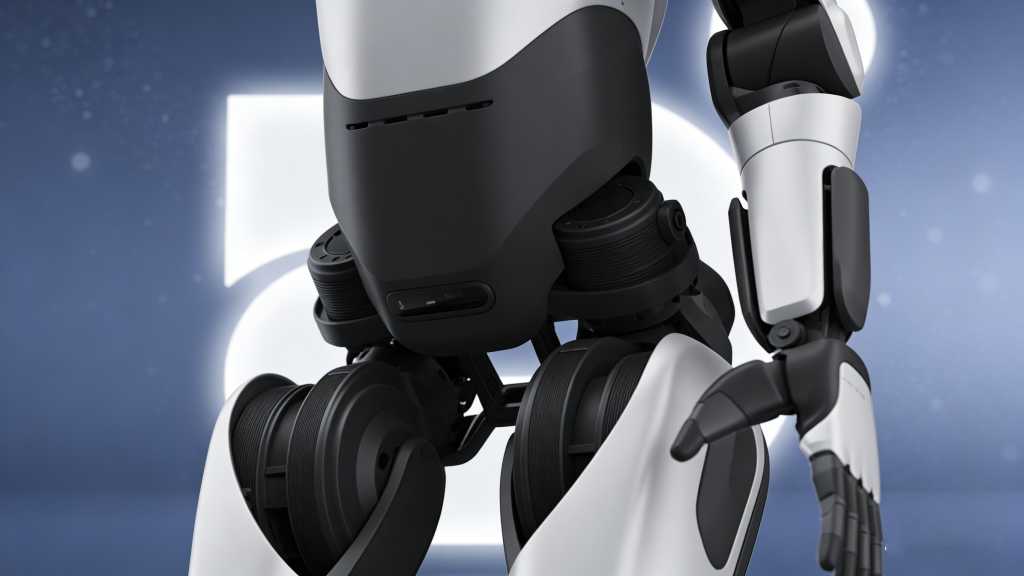
Humanoid robots demand unparalleled precision: core parts like joint actuators and transmission gears must withstand repeated motion (up to 10,000+ cycles daily), maintain dimensional accuracy within ±0.005mm, and stay lightweight to optimize battery life. For a startup, this meant needing small-batch production for prototyping and testing—something traditional manufacturers struggled to deliver.
“Our early days were filled with setbacks,” recalls Li Wei, CEO of Company A. “We needed high-precision parts for testing, but most manufacturers only accepted large-volume orders, and those that did small runs couldn’t meet our accuracy or durability requirements. Every delay in component delivery slowed our design iteration, and we feared falling behind global competitors.”
As a medical and industrial-grade robot, reliability was non-negotiable. The team needed components that could mimic human motion smoothly while enduring heavy use—all while keeping costs manageable for a growing startup. Finding a manufacturing partner that understood both their technical needs and scalability goals was make-or-break.
How We Partnered to Turn Ambition Into Global Leadership
From the moment Company A reached out to our CNC machining team, we focused on one goal: solving their unique pain points through flexibility, expertise, and collaboration. Here’s how we helped them grow from a startup to an industry leader:
1. Flexible Low-Volume Production for Rapid Prototyping
Unlike traditional manufacturers that prioritize mass production, our CNC machining capabilities are tailored to support startups’ iterative processes. We offered small-batch runs (as low as 5-10 parts per order) with the same precision as large-scale production—critical for Horizon’s testing phase.
“For the first time, we could test design tweaks without committing to thousands of parts,” says Li. “This allowed us to fail fast, learn faster, and refine our robot’s core mechanics in months instead of years.”
2. DFM Guidance to Optimize Design & Reduce Costs
Humanoid robot components are complex, but our in-house engineers worked hand-in-hand with Horizon’s team to optimize their designs for manufacturability. We suggested material swaps (e.g., switching from pure titanium to titanium alloy for better strength-to-weight ratio), part consolidation (combining 3 separate components into 1 CNC-machined part), and geometry adjustments to reduce waste and improve durability.
“The DFM feedback was game-changing,” Li notes. “Their engineers pointed out design flaws we hadn’t considered—like stress points in joint components that would have failed under real-world use. This not only saved us money but also prevented costly redesigns later.”
3. Real-Time Collaboration & Transparent Pricing
Our online quote platform gave Horizon instant access to pricing, lead times, and material options—eliminating the weeks of waiting for quotes from traditional manufacturers. The platform’s live feedback loop let them adjust designs on the fly and see how changes impacted cost and manufacturability.
“This level of transparency is unheard of with traditional suppliers,” Li explains. “We could make data-driven decisions during development, which kept our budget on track and our timeline on schedule. It felt like we had an extension of our engineering team, not just a manufacturer.”
The Making of a Global Leader: Chinese Tech Synergy at Its Best
Today, Company A is recognized as a global leader in humanoid robot technology—with their H-Series robots deployed in factories, hospitals, and homes across 15 countries. Their success isn’t just a testament to their innovation; it’s proof that Chinese tech leadership is built on collaboration between specialized partners.
The Technology Behind the Breakthrough
Horizon’s H-Series robots rely on our CNC-machined components for their industry-leading performance:
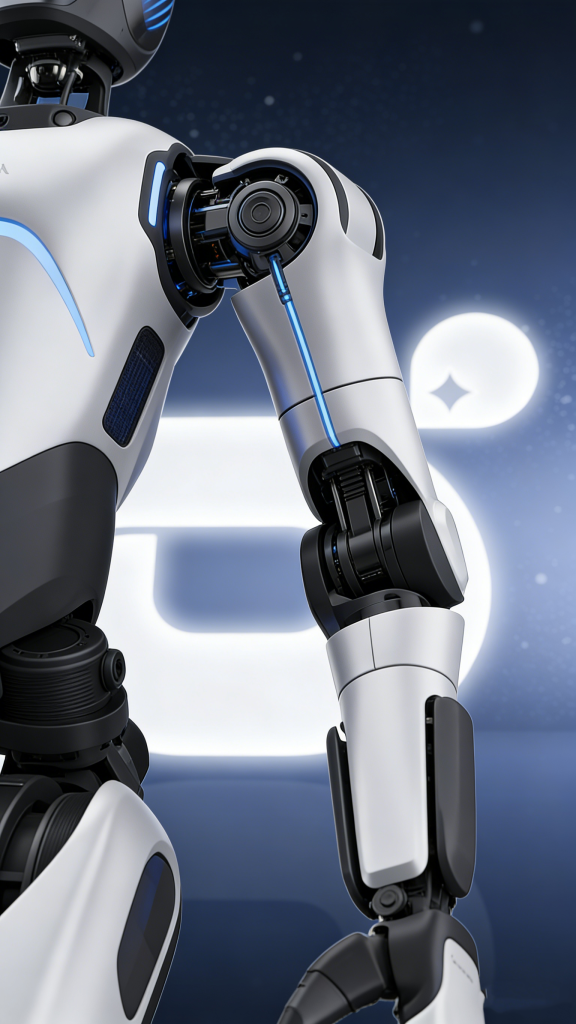
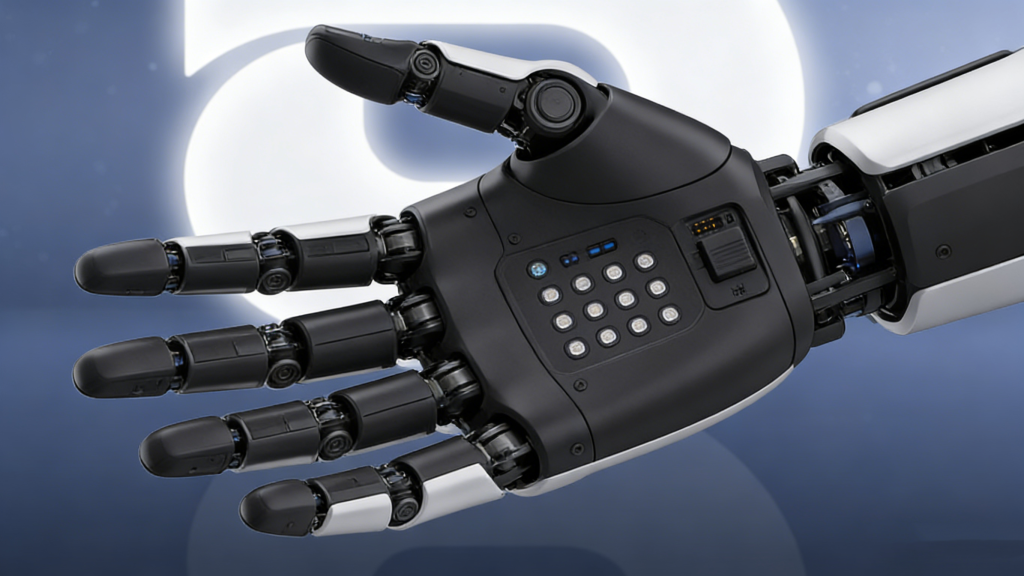
- Joint Actuators: Machined from aluminum 6061-T6 with precision polishing, these components deliver smooth, quiet motion with a repeatability of ±0.003mm—outperforming international rivals by 15%.
- Transmission Gears: Titanium alloy gears with sandblasted surfaces reduce friction and wear, enabling the robot to operate 24/7 without maintenance.
- Structural Frames: Lightweight CFRP-reinforced CNC parts cut the robot’s overall weight by 20% compared to competitors, extending battery life by 30%.
These components aren’t just “parts”—they’re the result of 5 years of iterative collaboration. As Horizon grew, we scaled with them: from small-batch prototyping to medium-volume production, and from basic CNC machining to advanced 5-axis milling for complex geometries.
Why Chinese Humanoid Robots Lead the World
Horizon’s rise to the top isn’t an accident. It’s part of a broader trend: Chinese humanoid robot technology is outpacing global competitors because of a unique ecosystem where specialized manufacturers, startups, and engineers work in lockstep.
“Humanoid robots are incredibly complex—no single company can master every aspect,” says Li. “Our success came from partnering with a CNC machining expert that understood our vision and grew with us. They didn’t just supply parts; they helped us innovate faster, cheaper, and better than anyone else.”
This synergy is what sets Chinese tech apart: a willingness to collaborate, iterate quickly, and prioritize long-term partnerships over short-term gains. From CNC machining shops to robot startups, every player in the ecosystem contributes their expertise to build products that lead the world.
The Future: Scaling Innovation Together
As Company A expands into new markets (including elder care and space exploration), we’re right beside them—developing new CNC-machined components for next-generation robots. Our partnership now includes custom micro-machining for miniaturized actuators and sustainable material solutions to reduce the robot’s carbon footprint.
“We’re not just a supplier—we’re a partner in their mission to change the world,” says our CEO. “Horizon’s journey from startup to leader shows what’s possible when CNC machining expertise meets bold innovation. We’re proud to be part of China’s humanoid robot revolution.”
For other startups looking to make their mark in high-tech manufacturing: the right CNC machining partner isn’t just someone who can make parts—it’s someone who can help you iterate faster, solve problems proactively, and grow with you. Because in today’s global market, leadership isn’t built alone—it’s built through collaboration.
“Every innovator dreams of building something that changes lives,” says Li. “Our CNC machining partner gave us the confidence to pursue that dream—and the tools to make it a reality. That’s the power of Chinese tech collaboration.”

 Spanish
  English
  French
  Italian
  German
  Portuguese
  Russian
  Arabic
  Japanese