
تُعدّ عمليات التصنيع باستخدام الحاسوب (CNC) مكلفةً بشكل أساسي بسبب ارتفاع تكاليف تشغيل الماكينة (150-300 دولار/ساعة)، ومتطلبات العمالة الماهرة، ووقت الإعداد الطويل، وتآكل الأدوات. مع ذلك، يمكن لتحسينات التصميم الاستراتيجية - بما في ذلك الزوايا الداخلية الدائرية، وزيادة التفاوتات المسموح بها، وتبسيط الهندسة، واستخدام مواد قياسية، وتحسين تشطيبات الأسطح - أن تُخفّض تكاليف الخراطة المخصصة بما يصل إلى 30 دولارًا مع الحفاظ على الجودة والوظائف.
فهم تكاليف التصنيع باستخدام الحاسوب (CNC): التحليل التفصيلي
قبل الخوض في استراتيجيات توفير التكاليف، من الضروري فهم العوامل التي تؤثر على نفقات التصنيع باستخدام الحاسوب (CNC). لا يقتصر الخراطة والطحن باستخدام الحاسوب على تكاليف المواد الخام فحسب، بل يشمل عمليات معقدة تتطلب معدات دقيقة، ومشغلين مهرة، ومراقبة جودة دقيقة.
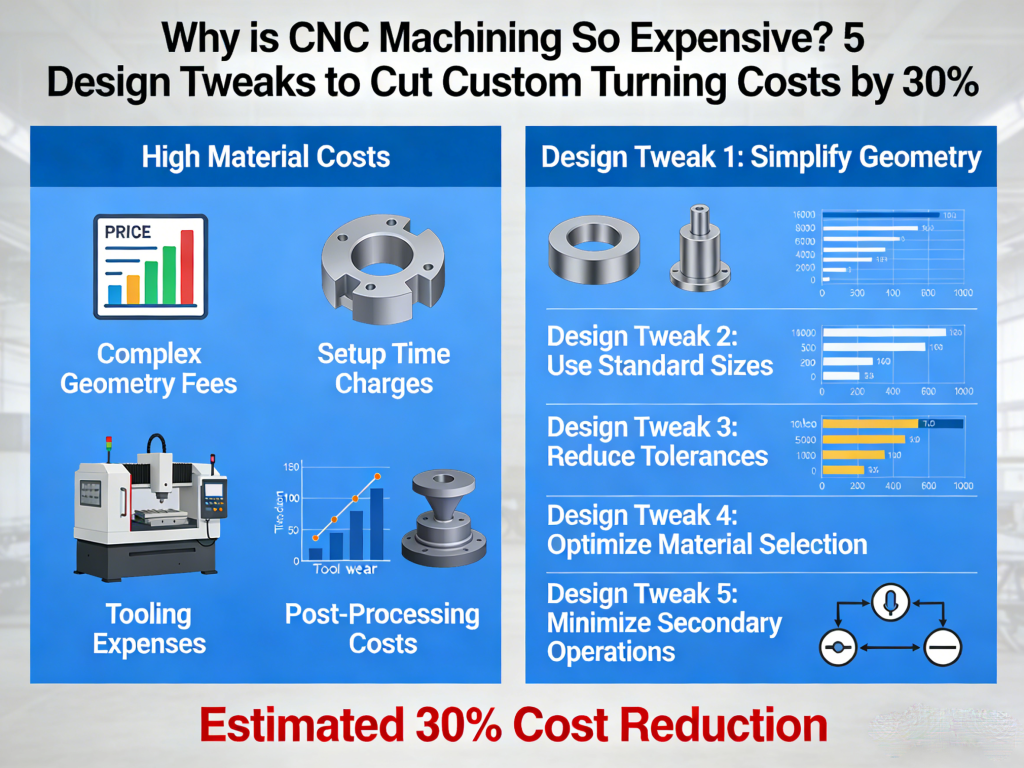
جزء أسطواني في ورشة صناعية مزودة بمعدات دقيقة حديثة
مكونات التكلفة الأساسية
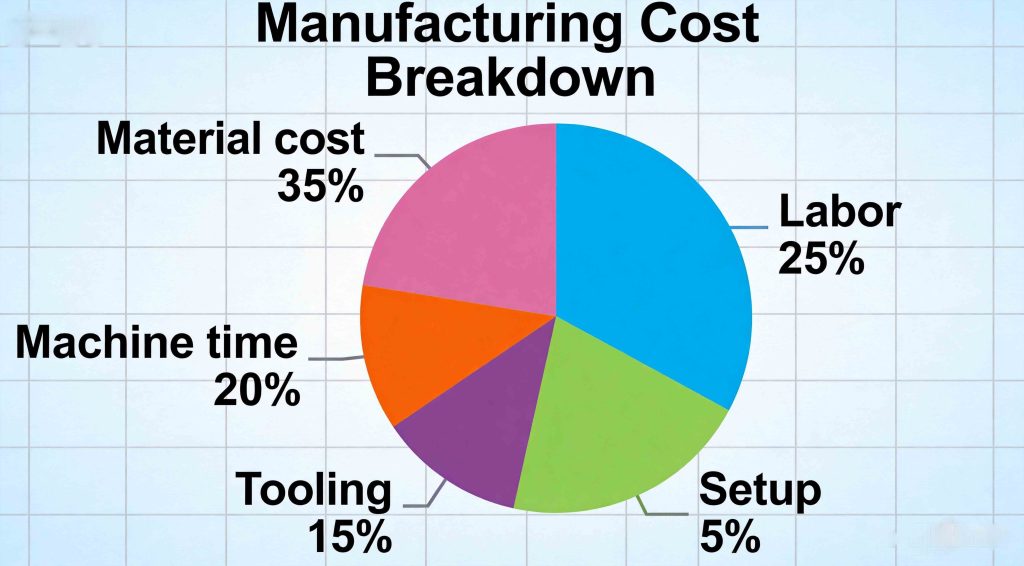
وقت تشغيل الآلة والعمالة (45-50% من إجمالي التكلفة)
تمثل آلات التحكم الرقمي الحاسوبي (CNC) استثمارات رأسمالية كبيرة، حيث تتراوح تكلفة مراكز التصنيع المتطورة ذات الخمسة محاور بين مليون و300 ألف ومليون دولار أمريكي. وتتراوح تكاليف التشغيل عادةً بين 150 و300 دولار أمريكي في الساعة، شاملةً الكهرباء والصيانة واستهلاك الآلة. ويحصل مبرمجو ومشغلو آلات التحكم الرقمي الحاسوبي المهرة على رواتب تنافسية، لا سيما بالنسبة للأجزاء المعقدة التي تتطلب خبرة برمجية متقدمة.
تكاليف المواد (25-30% من إجمالي التكلفة)
رغم أن تكاليف المواد تبدو بسيطة، إلا أنها تشمل أكثر من مجرد المخزون الخام. ومن بين العوامل:
- أسعار المواد الخام (قد يكلف التيتانيوم والسبائك الغريبة من 10 إلى 20 ضعف تكلفة الألومنيوم)
- نفايات المواد الناتجة عن عمليات التشغيل الآلي (إزالة ما يصل إلى 60% من المواد لبعض الأجزاء)
- معدلات الخردة وخسائر الجودة
الأدوات والإعداد (15-20% من التكلفة الإجمالية)
يتطلب كل جزء جديد أدوات وتجهيزات وإجراءات إعداد متخصصة. قد تتطلب الأجزاء المعقدة تغييرات متعددة في الأدوات، وقواطع خاصة، وتجهيزات مخصصة، مما يزيد من التكلفة الإجمالية. يتراوح وقت الإعداد من ساعة إلى ثماني ساعات حسب تعقيد الجزء، وخلال هذه الفترة لا تُدرّ الآلة أي ربح.
مراقبة الجودة والتفتيش (5-10% من التكلفة الإجمالية)
تتطلب متطلبات الدقة عمليات فحص صارمة. يساهم وقت آلة قياس الإحداثيات (CMM)، وفحص العينة الأولى، والتحكم الإحصائي في العملية في التكلفة النهائية، خاصة بالنسبة للصناعات مثل صناعة الطيران والأجهزة الطبية حيث تصل التفاوتات إلى ±0.001 مم.
تعديل التصميم #1: إضافة نصف قطر للزوايا الداخلية
تُعدّ الزوايا الداخلية الحادة من أهم العوامل المؤثرة في تكلفة عمليات التصنيع باستخدام الحاسوب (CNC). تكمن المشكلة الأساسية في أن أدوات القطع أسطوانية الشكل، مما يُنشئ نصف قطر طبيعي في قاع أي ثقب أو تجويف.
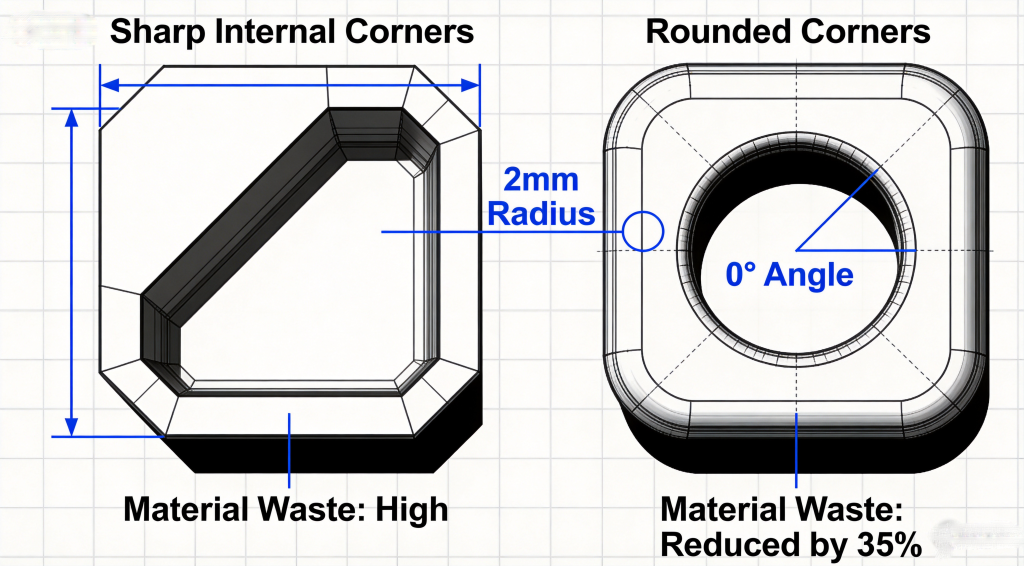
لماذا تزيد الزوايا الحادة من التكاليف؟
يتطلب تشكيل زاوية داخلية حادة عمليات متعددة:
- عملية الطحن النهائي: تُنشئ التجويف الأولي ذي نصف القطر المحدود
- القطع الكهربائي السلكي أو الأدوات الأصغر: عمليات إضافية للوصول إلى الزاوية
- عمليات إعداد متعددة: غالباً ما تتطلب إعادة وضع قطعة العمل
يؤدي هذا إلى زيادة وقت التشغيل (2-5 أضعاف الوقت لكل زاوية)، ويزيد من تآكل الأدوات، ويؤدي إلى مشاكل محتملة في الدقة ناتجة عن عمليات إعداد متعددة.
حل توفير التكاليف
أضف أنصاف أقطار داخلية مطابقة لأحجام الأدوات القياسية:
- قواطع طرفية قياسية: 1/16 بوصة (1.5875 مم)، 1/8 بوصة (3.175 مم)، 3/16 بوصة (4.7625 مم)، 1/4 بوصة (6.35 مم)
- نصف القطر الأدنى الموصى به: 0.5 × سمك المادة
- نصف قطر الزاوية ≥ نصف قطر الأداة لتصنيع فعال في تمريرة واحدة
التأثير على التكلفة: يمكن أن يؤدي إضافة أنصاف أقطار مناسبة إلى تقليل وقت التشغيل بمقدار 30-50% للأجزاء ذات الزوايا الداخلية المتعددة، مما يترجم مباشرة إلى وفورات متناسبة في التكلفة.
مثال على التنفيذ:
- قبل: زوايا داخلية بزاوية 90 درجة تتطلب عملية قطع كهربائي سلكي لمدة 4 ساعات
- بعد: تم إنجاز زوايا نصف قطرها 1/8 بوصة في ساعة واحدة باستخدام قاطع تفريز قياسي.
- الوفورات: انخفاض في وقت تشغيل الزوايا بمقدار 75%
تعديل التصميم #2: تحسين التفاوتات بشكل مناسب
تؤدي التفاوتات الضيقة إلى زيادة تكاليف التصنيع باستخدام الحاسوب بشكل كبير، ومع ذلك فإن العديد من التصاميم تحدد مستويات دقة تتجاوز المتطلبات الوظيفية الفعلية.
العلاقة بين التسامح والتكلفة
تزداد تكاليف التصنيع بشكل كبير مع ازدياد دقة القياسات:
| تسامح | مضاعف التكلفة | التطبيقات النموذجية |
|---|---|---|
| ±0.005 بوصة (0.127 مم) | 1.0x | قطع غيار للأغراض العامة |
| ±0.002 بوصة (0.051 مم) | 1.5x | الآلات الدقيقة |
| ±0.001 بوصة (0.025 مم) | 2.0x | مكونات الفضاء الجوي |
| ±0.0005 بوصة (0.013 مم) | 3.0x+ | الغرسات الطبية |
لماذا هذه الزيادة الكبيرة؟
- سرعات قطع أبطأ: تتطلب التفاوتات الدقيقة معايير تشغيل متحفظة
- عمليات تمرير متعددة: عمليات إضافية للتشطيب الخشن والتشطيب شبه النهائي
- أدوات متخصصة: قواطع عالية الجودة ذات انحراف ضئيل
- تفتيش مُحسّن: عمليات فحص جودة أكثر تكرارًا وتفصيلًا
مهمة التسامح الاستراتيجي
لا تطبق معايير التفاوت الضيقة إلا عند الضرورة:
- الأسطح الحرجة: محاور التحميل، أسطح منع التسرب، أسطح التزاوج
- التفاوتات المسموح بها في أماكن أخرى: الأسطح غير المتلامسة، والمناطق التجميلية، والأبعاد غير الحرجة
إرشادات عملية:
- القيمة الافتراضية هي ±0.005 بوصة (0.127 مم) ما لم يكن هناك مبرر لتفاوت أدق.
- حدد ±0.001 بوصة (0.025 مم) فقط للأبعاد الحرجة حقًا
- تجنب التفاوتات العامة في الرسومات بأكملها
- ضع في اعتبارك الأبعاد الهندسية والتفاوتات (GD&T) للأجزاء المعقدة
وفورات واقعية:
جزء عمود مخصص تم تحديده أصلاً عند ±0.001 بوصة في جميع أنحائه:
- مُنقّح: دقة المحور الحرج ±0.0005 بوصة، والأبعاد المتبقية ±0.005 بوصة
- النتيجة: انخفاض بنسبة 25% في وقت التشغيل وتكاليف الأدوات
- تم الحفاظ على الجودة: تم استيفاء جميع المتطلبات الوظيفية
تعديل التصميم #3: تبسيط هندسة الجزء
تؤدي الأشكال الهندسية المعقدة للأجزاء إلى زيادة تكاليف التصنيع باستخدام الحاسوب بشكل مباشر من خلال عوامل متعددة: إعدادات إضافية للآلة، وأدوات متخصصة، وأوقات دورة أطول، ومعدلات خردة أعلى.
ميزات هندسية تزيد التكلفة
التجاويف العميقة الضيقة (العمق > 4 أضعاف العرض):
- تتطلب أدوات متخصصة طويلة المدى مع مشاكل في الانحراف
- تؤدي عمليات القطع المتعددة الخفيفة إلى زيادة وقت التشغيل الآلي
- تؤثر مخاطر الاهتزاز على جودة السطح
- تأثير التكلفة: ضعف أو ثلاثة أضعاف تكلفة تشكيل التجويف القياسي
الانحناءات السفلية والتناقصات العكسية:
- تتطلب أدوات متخصصة (قواطع فتحات على شكل حرف T، قواطع وصلات متداخلة)
- غالباً ما تتطلب تجهيزات إضافية أو تركيبات خاصة
- تقليل صلابة ودقة التشغيل الآلي
- تأثير التكلفة: تكلفة إضافية تتراوح بين $200 و800 لكل ميزة من ميزات القطع السفلي
جدران رقيقة وميزات هشة:
- تتطلب معايير تشغيل متحفظة
- زيادة خطر الخردة (معدلات الخردة الشائعة من 10 إلى 20%)
- تجهيزات متعددة وهياكل داعمة
- تأثير التكلفة: 30-50% أعلى للأجزاء الهشة
استراتيجيات تحسين الهندسة
دمج الميزات حيثما أمكن:
- دمج أجزاء متعددة في مكونات واحدة
- تقليل العدد الإجمالي للأسطح المشغولة
- تقليل تغييرات الاتجاه
التصميم من أجل سهولة التصنيع:
- الحفاظ على سماكة جدار موحدة (بحد أدنى ضعف سماكة المادة)
- تجنب نسب العرض إلى الارتفاع التي تزيد عن 4:1 للجدران غير المدعومة
- أضف شرائح وفيرة عند نقاط الالتقاء
- ضع في اعتبارك إضافة دعامات قابلة للتضحية بها لأغراض التشغيل الآلي
استخدم إمكانيات الآلة القياسية:
- قم بالتصميم ضمن نطاق التصنيع ثلاثي المحاور كلما أمكن ذلك (تكلفة التصنيع بخمسة محاور تزيد بمقدار 30-50%).
- حافظ على حجم القطعة ضمن نطاق إمكانيات الآلة (القطع الأكبر حجماً تتطلب آلات أكبر وأكثر تكلفة).
- تجنب الميزات التي تتطلب تشطيبًا يدويًا
دراسة حالة: إعادة تصميم دعامة السيارات
- الأصل: أسطح منحنية ثلاثية الأبعاد معقدة، تتطلب تشغيلًا آليًا بخمسة محاور، $85/جزء
- إعادة تصميم: أسطح مستوية مبسطة، تشغيل آلي ثلاثي المحاور كافٍ، $52/جزء
- الوفورات: خفض تكلفة 39% مع الحفاظ على جميع المتطلبات الوظيفية
تعديل التصميم #4: اختيار مواد فعالة من حيث التكلفة
يؤثر اختيار المواد بشكل كبير على تكاليف التصنيع باستخدام الحاسوب (CNC) بما يتجاوز سعر المواد الخام، مما يؤثر على تآكل الأدوات وسرعات التصنيع ووقت المعالجة الإجمالي.
قابلية تشغيل المواد وتأثير التكلفة
مواد قابلة للتشكيل بدرجة عالية (مضاعف التكلفة: 1.0x):
- الألومنيوم 6061/7075: سرعات قطع عالية، تآكل أدوات منخفض
- النحاس الأصفر (C36000): تشكيل رقائق ممتاز، تكاليف أدوات منخفضة
- الفولاذ سهل التشغيل (1215، 12L14): مُحسَّن للتشغيل الآلي
المواد القابلة للتشكيل بشكل متوسط (مضاعف التكلفة: 1.5-2.0x):
- الفولاذ المقاوم للصدأ 304/316: مشاكل التصلب بالتشكيل، سرعات أبطأ
- الفولاذ الكربوني 1018/1045: قابلية التشغيل القياسية
- سبائك المغنيسيوم: سهولة التشغيل ولكن مع متطلبات السلامة من الحرائق
المواد التي يصعب تشكيلها آلياً (مضاعف التكلفة: 2.0-4.0x):
- سبائك التيتانيوم (Ti-6Al-4V): موصلية حرارية منخفضة، قوة عالية
- سبائك النيكل (إنكونيل 718): مقاومة فائقة للحرارة والتآكل
- فولاذ الأدوات (H13، P20): صلب، ويتطلب أدوات متخصصة
- السبائك الفائقة: غالباً ما تتطلب عملية الطحن بدلاً من التشغيل الآلي
إرشادات اختيار المواد الاستراتيجية
مطابقة خصائص المواد مع المتطلبات:
- استخدم الألومنيوم حيثما يكفي توفير الوزن والقوة الكافية.
- اختر الفولاذ المقاوم للصدأ فقط عندما تكون مقاومة التآكل أمراً بالغ الأهمية.
- Reserve titanium and superalloys for truly demanding applications
Consider machinability ratings:
- ASTM machinability ratings provide standardized comparisons
- Higher ratings = lower machining costs
- Example: Aluminum 6061 (100% rating) vs. Titanium (15-20% rating)
Balance material cost vs. machining cost:
- Sometimes more expensive materials reduce overall cost due to faster machining
- Calculate total cost: (Material × Quantity) + (Machining Rate × Cycle Time)
- Example: Free-machining steel may cost 20% more but reduce machining time by 40%
Cost Optimization Example:
Medical device housing originally specified in 316 stainless:
- Original material cost: $15/part, machining time: 45 minutes, total: $52.50/part
- Alternative: 6061 aluminum with appropriate coating: $8/part, machining time: 15 minutes, total: $23.75/part
- Savings: 55% cost reduction while meeting functional requirements
Design Tweak #5: Optimize Surface Finish Requirements
Surface finish specifications (Ra values) directly impact CNC machining costs through additional operations, slower machining parameters, and increased inspection requirements.
Surface Finish Cost Hierarchy
Standard Machined Finish (Ra 125-250 μin / 3.2-6.3 μm):
- Achieved during standard roughing and semi-finishing
- No additional operations required
- Cost impact: Baseline
Fine Machined Finish (Ra 63-125 μin / 1.6-3.2 μm):
- Requires dedicated finishing passes
- Slower cutting speeds and smaller depths of cut
- Cost impact: 20-30% increase
Precision Finish (Ra 32-63 μin / 0.8-1.6 μm):
- Multiple finishing operations
- Specialized tooling and careful parameter selection
- Cost impact: 50-75% increase
Super Precision Finish (Ra < 32 μin / < 0.8 μm):
- Often requires grinding, honing, or polishing
- Additional operations and equipment
- Cost impact: 100%+ increase
Strategic Surface Finish Specification
Apply tight finishes only where functional:
- Contact surfaces (bearings, seals): Ra 32 or finer
- Cosmetic areas: Ra 63-125 typically sufficient
- Non-critical surfaces: Standard machined finish adequate
Consider functional requirements vs. aesthetics:
- Separate functional specifications from cosmetic requirements
- Use post-processing (polishing, coating) for cosmetic improvements rather than tighter machining tolerances
Planar vs. complex surfaces:
- Planar surfaces are easier to finish economically
- Complex curved surfaces require specialized techniques
- Consider redesigning to optimize finishable surfaces
Material-specific considerations:
- Aluminum: Achieves good finishes with proper tooling
- Stainless steel: Work hardening affects finish consistency
- Titanium: Galling risks during finishing operations
Cost-Saving Example:
Hydraulic manifold component:
- Original: All surfaces specified Ra 32, total cost $85/part
- Optimized: Critical sealing surfaces Ra 32, remaining surfaces Ra 125, total cost $58/part
- Savings: 32% cost reduction with maintained functionality
Implementing Design for Manufacturing (DFM)
Implementing these five design tweaks systematically requires adopting Design for Manufacturing (DFM) principles. This isn’t about compromising quality—it’s about optimizing the relationship between design requirements and manufacturing economics.
DFM Process Integration
Early Collaboration:
- Engage manufacturing partners during design phase
- Conduct DFM reviews before finalizing designs
- Leverage manufacturer expertise on cost drivers
Cost-Benefit Analysis:
- Quantify cost savings for each design modification
- Evaluate impact on functionality and performance
- Consider lifecycle costs (initial manufacturing vs. total cost of ownership)
Documentation and Specification:
- Clearly mark critical dimensions and surfaces
- Use GD&T to define requirements precisely
- Avoid over-specification of non-critical features
Measuring Success
Cost Reduction Metrics:
- Target: 20-30% overall cost reduction achievable
- Track: Per-part cost, setup time, tooling costs, scrap rates
- Benchmark: Compare optimized designs to previous iterations
Quality Metrics:
- Maintain or improve first-pass yield
- Reduce dimensional variation
- Enhance consistency across production runs
Lead Time Improvements:
- Faster setup and reduced operations shorten delivery times
- Simplified designs enable faster quotations
- Reduced complexity allows smaller batch sizes without penalty
Conclusion: Strategic Cost Optimization
CNC machining costs are substantial but not immutable. By understanding the fundamental cost drivers—machine time, labor, setup, tooling, and quality control—you can make informed design decisions that significantly reduce costs without compromising functionality or quality.
The five design tweaks presented—adding radius to internal corners, optimizing tolerances, simplifying geometry, selecting cost-effective materials, and optimizing surface finish requirements—can collectively reduce custom turning costs by up to 30%. These aren’t shortcuts; they’re strategic design optimizations based on manufacturing realities.
Key Takeaways:
- Design for manufacturing, not just for function: Early consideration of manufacturing constraints pays dividends in cost reduction
- Apply precision strategically: Reserve tight tolerances and fine finishes for truly critical surfaces and dimensions
- Leverage standard tooling and processes: Designing around standard capabilities dramatically reduces costs
4. Collaborate early with manufacturing partners: Their expertise can identify optimization opportunities before designs are finalized
5. Think in terms of total cost: Consider material costs, machining time, setup requirements, and quality control as interconnected factors
The most successful cost optimization initiatives balance engineering requirements with manufacturing economics. When applied thoughtfully, these design strategies don’t just reduce costs—they improve manufacturability, enhance quality consistency, and accelerate delivery times.
الأسئلة الشائعة (FAQ)
What is the minimum order quantity for cost-effective CNC machining?
CNC machining is cost-effective even for small quantities. Setup costs are amortized across all parts, so while the per-part cost decreases with larger quantities, there’s no minimum order requirement. Prototypes (1-10 pieces) typically have higher per-part costs but enable design validation before larger production runs.
How do I know if my tolerances are too tight?
Review functional requirements for each dimension. If a dimension doesn’t directly impact part assembly, performance, or regulatory compliance, consider using looser tolerances (±0.005″ or wider). Consult with manufacturing partners who can provide guidance on appropriate tolerance levels for specific applications.
Can I mix different materials in a single CNC part?
Yes, but this typically requires assembly operations rather than single-piece machining. Different materials can be machined separately and then assembled via welding, fasteners, or press-fits. This approach is often more cost-effective than attempting to machine dissimilar materials together.
What’s the difference between 3-axis and 5-axis CNC machining in terms of cost?
5-axis machining typically costs 30-50% more than 3-axis due to higher machine costs, more complex programming, and longer setup times. However, 5-axis can reduce total cost by eliminating multiple setups for complex parts. Choose based on part complexity rather than defaulting to the most advanced technology.
How do surface finishes affect part functionality?
Surface finish primarily affects friction, wear, fluid flow, and appearance. Tighter finishes (lower Ra values) are critical for sealing surfaces, bearings, and moving parts. For structural or cosmetic surfaces, looser finishes are often adequate and significantly reduce machining costs.
Can I save money by using different materials while maintaining the same part design?
Often yes, but the decision requires careful analysis. Consider material strength, corrosion resistance, thermal properties, and regulatory requirements. While materials like aluminum are generally cheaper to machine than titanium or superalloys, they may not meet all functional requirements. A thorough cost-benefit analysis is essential.
Ready to Optimize Your CNC Machining Costs?
Understanding these cost-saving strategies is the first step. Implementing them effectively requires collaboration with experienced manufacturing partners who can provide practical guidance on optimizing your specific designs.
For expert advice on applying these principles to your next CNC machining project, or for a complimentary design review with cost optimization recommendations, connect with precision manufacturing specialists who understand both the engineering and economic aspects of CNC turning and milling.
- هل أنت قلق بشأن سرقة الملكية الفكرية؟ كيف تحمي تصميمات أجهزتك عند الاستعانة بمصادر خارجية لتصنيعها باستخدام آلات CNC؟
- الأجزاء المشوهة والمكونات المصنعة آليًا المشوهة: منع الإجهاد الداخلي والتشوه في الأجزاء المصنعة باستخدام الحاسوب (CNC) المخصصة
- هل تواجه صعوبة مع موردي آلات CNC غير الموثوق بهم؟ كيف تختار شريكًا موثوقًا لتصنيع الآلات حسب الطلب لتحقيق النجاح على المدى الطويل؟
- كيفية التفاوض على أسعار أفضل لآلات CNC: دليل شامل للمشترين بكميات قليلة
- هل تدفع مبالغ زائدة مقابل دقة عالية؟ 5 طرق لتحديد دقة CNC المناسبة دون زيادة التكاليف

 Arabic
  English
  French
  Italian
  German
  Spanish
  Portuguese
  Russian
  Japanese