
Part 1: Core Qualifications for Aerospace CNC Machining Partners (1000 words)
1.1 Compliance with Aerospace Industry Standards (300 words)
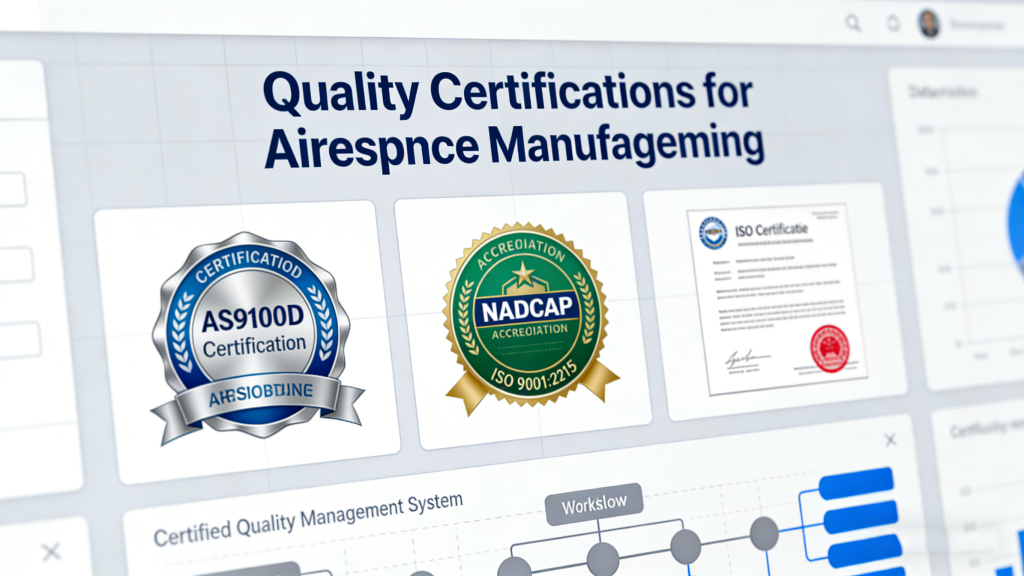
Aerospace CNC machining demands uncompromising adherence to industry-specific standards, starting with critical certifications that validate a partner’s ability to meet safety and quality mandates.
AS9100: The foundational quality management system (QMS) for aerospace, far more stringent than ISO 9001. It requires robust process control, risk management, and continuous improvement—essential for components used in aircraft, spacecraft, and defense systems. Compliance with AS9100 is non-negotiable, as it is mandated by major OEMs (e.g., Boeing, Airbus) and regulators like the FAA (U.S. Federal Aviation Administration) and EASA (European Union Aviation Safety Agency).
NADCAP: Critical for specialized processes such as heat treatment, non-destructive testing (NDT: ultrasonic, X-ray, liquid penetrant), and welding. Administered by the Performance Review Institute (PRI), NADCAP certification ensures these high-risk processes meet strict technical requirements—for example, NDT must detect defects as small as 0.001 inches in turbine blades to prevent in-flight failures.
Material Traceability: Aerospace components require full traceability from raw material sourcing to final delivery. Partners must maintain detailed batch records, material certifications (e.g., ASTM F136 for titanium alloys, AMS 5662 for Inconel), and documentation linking each part to its raw material lot. This traceability is vital for recalling defective parts and complying with regulatory audits.
Additional compliance includes adherence to conflict mineral regulations (e.g., the Dodd-Frank Act’s Section 1502) to avoid materials sourced from war zones, and environmental standards (e.g., REACH) to ensure sustainable production practices.
1.2 Precision and Quality Control Capabilities (350 words)
Aerospace parts operate in extreme conditions (high temperature, pressure, and vibration), requiring micron-level precision and zero-defect manufacturing.
High-Precision Machining Equipment: Partners must invest in advanced CNC machines capable of holding tolerances as tight as ±0.0001 inches (2.54 microns). Key equipment includes:
5-axis machining centers (e.g., DMG MORI DMU 50, Haas UMC-750) for complex geometries like turbine blades and structural brackets, which require multi-angle cutting without repositioning.
Multi-spindle lathes for high-volume, high-precision components (e.g., engine valves) to ensure consistent dimensional accuracy.
Calibration and maintenance are equally critical: machines must be calibrated quarterly using laser interferometers (e.g., Renishaw XL-80) to correct geometric errors, and preventive maintenance schedules must be strictly followed to avoid downtime or accuracy drift.
Rigorous Quality Inspection Processes: In-house inspection capabilities are non-negotiable. Essential tools include:
Coordinate Measuring Machines (CMMs: e.g., Zeiss Contura G2) with ±0.0002-inch accuracy to verify 3D dimensions and geometric tolerances (GD&T) per ASME Y14.5.
Optical comparators and laser scanners for fast, non-contact inspection of surface features and complex curves.
NDT equipment (ultrasonic, eddy current) to detect internal defects (e.g., porosity in cast components, cracks in welded joints) that could lead to catastrophic failure.
Partners must also implement statistical process control (SPC) to monitor production variation and first-article inspection (FAI) per AS9102 for new parts—ensuring the first batch meets design specifications before full-scale production.
1.3 Material Expertise for Aerospace-Grade Materials (350 words)
Aerospace components rely on advanced materials with exceptional strength-to-weight ratios, heat resistance, and fatigue durability—materials that are often difficult to machine. A qualified partner must demonstrate deep expertise in:
Handling Advanced Aerospace Materials:
Expertise in material properties is critical: for example, understanding the fatigue resistance of Ti-6Al-4V means adjusting cutting parameters to avoid microcracks that could shorten part lifespan.
Titanium Alloys (e.g., Ti-6Al-4V): Lightweight and corrosion-resistant but prone to work hardening and high cutting forces. Partners must use carbide or diamond-coated tools, low cutting speeds (100–300 SFM), and high-pressure coolant systems to prevent tool wear and material deformation.
Nickel-Based Superalloys (e.g., Inconel 718): Heat-resistant (up to 1,800°F) but abrasive, requiring specialized tooling (e.g., polycrystalline cubic boron nitride, PCBN) and cryogenic cooling to reduce machining temperatures.
Composites (e.g., Carbon Fiber-Reinforced Polymers, CFRP): Prone to delamination and fiber fraying; partners must use sharp, diamond-tipped tools and low-feed machining to preserve structural integrity.
High-Strength Steels (e.g., AISI 4340): Used for landing gear and fasteners, requiring controlled heat management to avoid thermal distortion.
Sustainable Material Sourcing: Partners must source materials from certified suppliers (e.g., AMS-approved vendors) to ensure consistency. Compliance with conflict mineral regulations (Dodd-Frank Act) is mandatory, as aerospace OEMs prohibit materials containing tin, tantalum, tungsten, or gold from conflict zones. Additionally, reliable partners maintain backup material suppliers to mitigate shortages and ensure uninterrupted production.
Part 2: Operational and Collaborative Capabilities (1000 words)
2.1 Supply Chain Reliability and Timeliness (300 words)
Aerospace supply chains are highly interdependent, with just-in-time (JIT) delivery requirements—delays can disrupt OEM production schedules, leading to costs of up to $100,000 per hour for aircraft manufacturers. A reliable partner must demonstrate:
Proven On-Time Delivery Track Record: Request data on past performance (e.g., 99%+ on-time delivery rate for the last 24 months) and references from aerospace clients. Partners should use production planning software (e.g., ERP systems) to optimize scheduling and avoid bottlenecks.
Contingency Planning: To mitigate risks like machine downtime, material shortages, or natural disasters, partners must have:
Backup equipment (e.g., spare 5-axis machining centers) to maintain production if primary machines fail.
Alternate material suppliers with pre-negotiated contracts to avoid delays from supply chain disruptions.
Disaster recovery plans (e.g., off-site data backups, redundant power systems) to ensure business continuity.
Scalability for Variable Demand: Aerospace projects often transition from low-volume prototyping (e.g., 10–50 parts for new aircraft models) to high-volume production (e.g., 10,000+ parts for commercial jets). A capable partner should adjust capacity without sacrificing quality—for example, adding shifts, investing in automated tool changers, or partnering with trusted subcontractors for peak demand. Scalability also ensures consistency if the project expands, eliminating the need to switch suppliers mid-stream (which risks quality gaps).
2.2 Engineering and Design Collaboration (350 words)
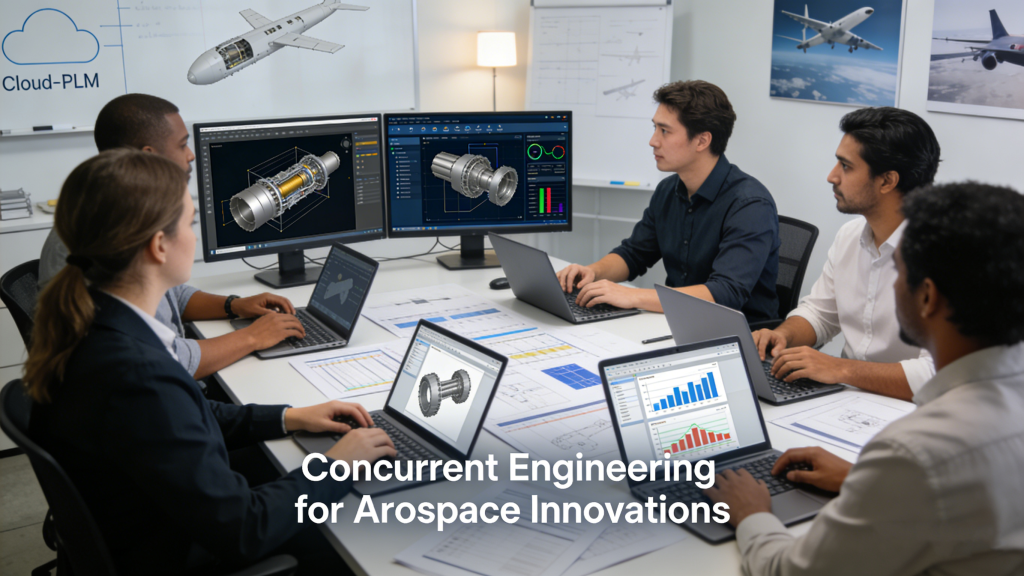
Aerospace parts are often complex and iterative, requiring close collaboration between the machining partner and the OEM’s engineering team. Key collaborative capabilities include:
Design for Manufacturability (DFM) Support: Partners should engage early in the design phase to optimize part geometry, reduce machining complexity, and lower costs. For example, simplifying a part’s internal channels to avoid deep, hard-to-reach features can cut machining time by 30% while maintaining functionality. Expertise in CAD/CAM software (e.g., SolidWorks, Mastercam, Siemens NX) is essential—partners must import 3D models, simulate machining processes, and identify potential issues (e.g., tool collisions) before production.
Problem-Solving and Innovation: Aerospace machining often presents unique challenges, such as machining internal cooling channels in turbine blades or achieving tight tolerances in heat-resistant alloys. A qualified partner’s engineering team should have a track record of solving these problems—for example, using high-speed machining (HSM) to reduce cycle time for Inconel parts, or cryogenic cooling to prevent tool wear in titanium. Innovation can also lead to cost savings: for instance, developing custom tool paths to reduce material waste by 15–20%.
Prototype Development Expertise: Many aerospace projects start with prototyping to test form, fit, and function. Partners should handle low-volume, high-complexity prototypes efficiently, using rapid setup processes (e.g., modular fixturing) to reduce lead times from weeks to days. They should also provide feedback on prototype performance (e.g., dimensional accuracy, material behavior) to inform design iterations.
2.3 Data Security and Communication Transparency (350 words)
Aerospace supply chains involve sensitive information, including proprietary designs, technical specifications, and defense-related data. A trustworthy partner must prioritize data security and transparent communication:
Data Protection: To prevent breaches, partners must implement robust cybersecurity measures:
Encrypted file transfers (e.g., SFTP, VPN) for design files and production data.
Restricted access protocols (e.g., role-based permissions) to limit access to sensitive information.
Regular cybersecurity audits and employee training to mitigate phishing and ransomware risks.
For defense-related projects, ITAR (International Traffic in Arms Regulations) compliance is mandatory—partners must control access to export-restricted data and maintain detailed records of who handles sensitive information.
Transparent Communication and Reporting: Stakeholders need real-time visibility into production progress to make informed decisions. A reliable partner should:
Responsiveness is key: partners should return queries within 24 hours and assign a dedicated account manager to oversee the partnership, ensuring clear communication and accountability.
Provide a customer portal or project management system (e.g., Asana, Monday.com) for tracking orders, viewing inspection reports, and accessing material certifications.
Send regular progress updates (e.g., daily or weekly) and notify clients immediately of potential issues (e.g., material delays, tooling problems) with proposed solutions.
Deliver comprehensive documentation upon completion, including FAI reports, SPC data, material traceability records, and NDT results—critical for OEM audits and regulatory compliance.
FAQs (300 words)
1. What certifications are non-negotiable for an aerospace CNC machining partner? (100 words)
AS9100 is the foundational non-negotiable certification, as it’s tailored to aerospace-specific quality management. NADCAP is mandatory for specialized processes like NDT, heat treatment, or welding, ensuring these high-risk operations meet strict technical standards. ITAR compliance is required for defense-related projects to protect export-restricted data. Additionally, material traceability certifications (e.g., compliance with AMS, ASTM standards) are essential to validate raw material quality and origin. Without these, a partner cannot meet OEM or regulatory requirements.
2. How does a partner’s experience with titanium affect their suitability for aerospace projects? (100 words)
Titanium is ubiquitous in aerospace due to its strength-to-weight ratio but is notoriously difficult to machine (high cutting forces, work hardening, and heat generation). A partner with titanium expertise uses specialized tooling (carbide, diamond-coated), high-pressure coolant systems, and optimized cutting parameters to minimize defects. They understand how to preserve titanium’s fatigue resistance and corrosion properties—critical for safety-critical parts like engine components. Poor titanium machining can lead to microcracks or dimensional inaccuracies, making experience with this material a key indicator of suitability.
3. Why is scalability important in aerospace CNC machining partnerships? (100 words)
Aerospace projects typically progress from low-volume prototyping to high-volume production. A scalable partner avoids the risks of switching suppliers mid-project (e.g., quality inconsistencies, delayed timelines) by adapting capacity to demand. They can handle both complex prototypes (10–50 parts) and mass-produced components (10,000+ parts) while maintaining precision and on-time delivery. Scalability also supports flexibility for demand spikes (e.g., replacement parts for fleet maintenance) or project expansions, ensuring long-term supply chain stability and reducing operational risks for OEMs.

 French
  English
  Italian
  German
  Spanish
  Portuguese
  Russian
  Arabic
  Japanese