
Reason:Due to the pressure on Germany’s economic development, its industrial output has been declining for four consecutive years. The country’s car production has dropped by approximately 20% compared to its peak level. The traditional manufacturing model is facing unprecedented challenges brought about by intensified global competition and rising energy costs. China leads in the development of humanoid robots, and there is a technological complementarity between Germany and China. Visits and cooperation can drive Germany’s economic development and alleviate the pressure on its economic growth.
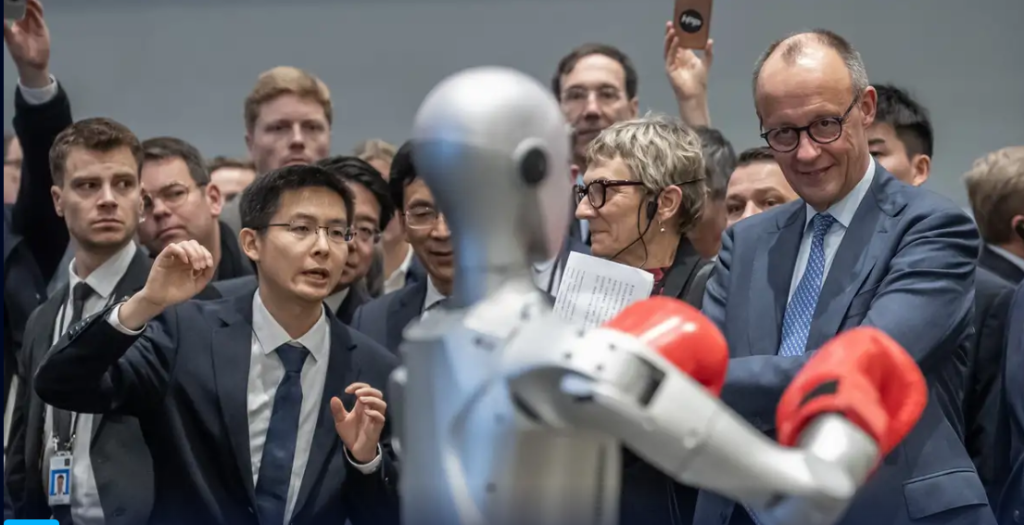
On February 26, 2026, German Chancellor Friedrich Merz made a historic visit to Unitree Robotics in Hangzhou, marking a pivotal moment in Sino-German industrial collaboration. This unprecedented visit—the only Chinese company included in Chancellor Merz’s official itinerary—signals a profound shift in how global manufacturing powers approach robotics innovation. With a delegation of 30 German industry leaders from automotive, chemical, and machinery sectors, the visit underscores the critical role of precision manufacturing in enabling next-generation robotic systems.
At the heart of this technological convergence lies CNC machining—the unsung hero transforming raw materials into the precision components that drive robotic performance. This analysis explores how precision CNC machining, particularly for harmonic reducers and servo motors, serves as the foundation for robot manufacturing excellence, creating new opportunities for Sino-German industrial partnership in the rapidly evolving robotics landscape.
Strategic Context: Germany’s Pivot Toward Chinese Robotics Innovation
Political and Economic Drivers Behind the Historic Visit
Chancellor Merz’s visit to Unitree represents more than ceremonial diplomacy—it reflects Germany’s strategic recalibration in an era of shifting global manufacturing dynamics. Several compelling factors drive this realignment:
- German Economic Pressures: Germany’s industrial output has declined for four consecutive years, with automotive production down approximately 20% from peak levels. The traditional German manufacturing model faces unprecedented challenges from global competition and rising energy costs.
- China’s Robotics Ascendancy: China now dominates global humanoid robot installations with over 80% market share in 2025. Unitree alone commands 26.4% of global installations, while AgiBot leads with 30.4%, according to Counterpoint Research data.
- Complementary Technology Ecosystems: Germany excels in precision components—harmonic reducers, servo motors, and encoders—while China leads in robotics algorithm integration, system-level optimization, and cost-effective mass production.
> “This visit reflects Germany’s recognition that future industrial competitiveness requires integrating Chinese robotics innovation with German precision manufacturing excellence,” notes Dr. Wang Tianmiao, Honorary Director of Robotics at Beihang University. “It marks a transition from technology export to collaborative innovation.”
Implications for Manufacturing Partnership
The visit catalyzed several concrete agreements, including a 180 million euro joint development program focused on humanoid robots. This partnership framework envisions Germany supplying precision components—muscle and joints—while Chinese companies contribute artificial intelligence algorithms and system integration capabilities—the brain and nervous system.
For CNC machining service providers, this collaboration opens unprecedented opportunities in:
- Joint development programs requiring ultra-high precision components
- Supply chain integration between German precision parts manufacturers and Chinese robot assemblers
- Cross-border technology transfer in advanced machining techniques
- Shared quality standards harmonizing European and Chinese manufacturing requirements
The Robotics Manufacturing Value Chain: Critical Precision Barriers
Core Technologies Defining Robot Performance
Modern robotics systems—particularly humanoid robots and advanced collaborative robots—require precision that challenges conventional manufacturing capabilities. The value chain comprises several technologically demanding stages, each presenting unique precision challenges:
Harmonic Reducer Manufacturing
- Tolerance requirements: Profile accuracy under 4 microns, surface hardness uniformity within ±2 HRC
- Critical dimensions: Flex spline wall thickness as thin as 0.2mm requiring extreme concentricity control
- Performance impact: Harmonic drives enable 30:1 to 160:1 reduction ratios in compact form factors, essential for humanoid joint articulation
- Market value: Global harmonic reducer market projected to exceed $4.8 billion by 2028
Servo Motor Systems
- Precision requirements: Rotor dynamic runout under ±5 microns, magnetic pole positioning accuracy within 1 arc minute
- Material challenges: Rare earth magnet machining requiring specialized non-magnetic tooling and cooling strategies
- Performance impact: Servo systems directly determine robot positioning accuracy, response speed, and energy efficiency
- Integration complexity: Motors must seamlessly integrate with encoders achieving 17-bit resolution or higher
Precision Structural Components
- Application scope: Robot arm frames, joint housings, load-bearing brackets requiring exceptional stiffness-to-weight ratios
- Material diversity: Aluminum 6061/7075, titanium alloys, carbon fiber composites, engineered plastics
- Precision requirements: Geometric tolerances IT4-IT5, surface roughness Ra 0.2-0.4 microns
- Manufacturing complexity: Large envelope parts requiring 5-axis simultaneous machining with thermal compensation
Over 60% of mechanical failures in robotics applications trace to transmission issues, primarily gear-related precision problems. CNC machining capabilities directly determining whether robots achieve intended performance specifications or suffer premature failures, reliability issues, and costly downtime.
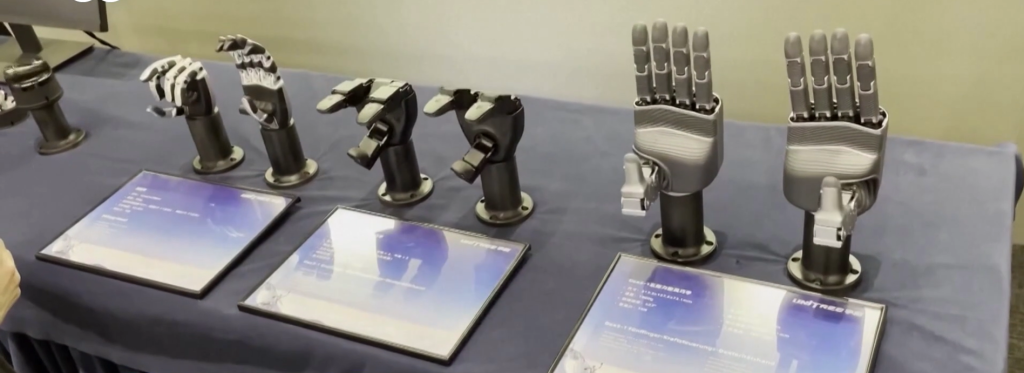
CNC Machining: Enabling Robot Component Manufacturing Excellence
Advanced Machining Technologies for Robotics Applications
CNC machining represents the cornerstone technology transforming raw materials into precision robot components. Several advanced machining techniques prove essential for meeting robotic system requirements:
5-Axis Simultaneous Machining
- Enables complex geometry production in single setups, reducing accumulated errors from multiple operations
- Critical for harmonic reducer flex splines requiring simultaneous contouring and concentricity control
- Typical accuracy improvements: 40-60% reduction in geometric deviations versus 3-axis approaches
- Applications: Robot joint housings, complex linkage components, integrated motor-reducer assemblies
High-Speed Precision Machining (HSM)
- Utilizes spindle speeds 20,000-40,000 RPM with small depth cuts for superior surface finish
- Essential for achieving Ra 0.2-0.4 micron surface roughness on harmonic reducer components
- Reduces thermal distortion affecting precision in thin-walled components
- Tool life improvements: 25-35% extended through optimized cutting parameters
Micro-Machining Capabilities
- Enables production of features smaller than 50 microns with ±2 micron tolerances
- Critical for encoder patterns, servo motor shafts, and miniature harmonic drive components
- Requires specialized micro-tooling with diameter compensation strategies
- Applications: Precision sensor housings, micro-gear sets, optical encoder components
Hard Material Machining Expertise
- Titanium alloys (Ti-6Al-4V), nitrided steels (17-4 PH), hardened tool steels (HRC 58-62)
- Requires specialized cutting tools, optimized coolant strategies, and rigid machine platforms
- Essential for high-performance robot components requiring strength-to-weight optimization
- Surface integrity maintenance: Prevention of micro-cracks, work hardening, and thermal damage
Process Integration: From Raw Material to Precision Component
Successful robot component manufacturing requires seamless integration of multiple CNC machining capabilities:
- Design for Manufacturing (DFM) Optimization
- Collaborative engineering with robot designers for manufacturability assessment
- Tolerance stack-up analysis identifying critical precision requirements
- Material selection balancing cost, machinability, and performance
- Fixturing design minimizing deformation and ensuring consistent locating
- Precision Programming and Simulation
- Advanced CAM software enabling toolpath optimization for harmonic reducer machining
- Virtual verification detecting potential collisions and process limitations
- Cycle time optimization through efficient material removal strategies
- Real-time toolpath compensation based on in-process measurement data
- Rigorous Process Control
- First Article Inspection (FAI) validating entire production setup before full runs
- Statistical Process Control (SPC) monitoring critical dimensions through production batches
- Tool wear monitoring maintaining consistent cutting performance
- Thermal management controlling machine ambient temperature within ±0.5°C
4. Advanced Quality Metrology
- CMM inspection verifying dimensional accuracy to 1 micron level
- Surface roughness measurement confirming Ra values to 0.05 micron precision
- Roundness, cylindricity, and concentricity measurement for rotary components
- Non-contact optical inspection for complex harmonic drive geometries
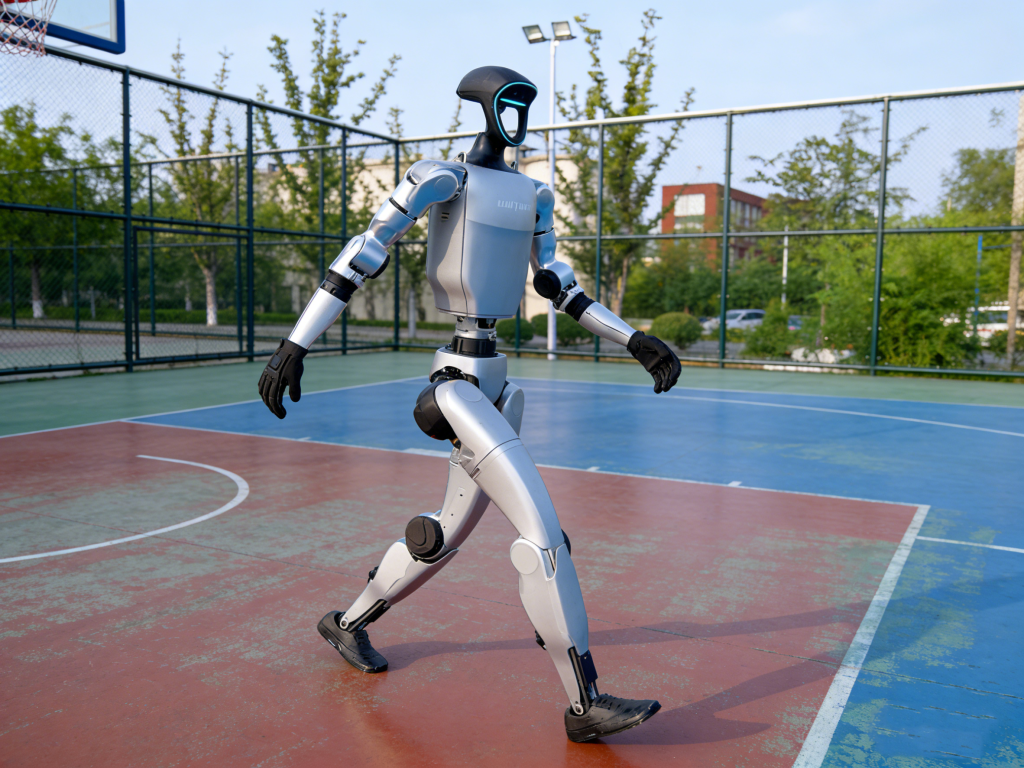
Our Precision CNC Machining Capabilities for Robot Manufacturers
Technical Excellence in Harmonic Reducer Manufacturing
Our company brings specialized expertise in machining the most demanding harmonic reducer components:
Harmonic Drive Flex Spline Manufacturing
- Precision achievements: Profile accuracy under 4 microns, wall thickness variation within ±2 microns
- Equipment capabilities: 5-axis CNC machining with sub-micron positioning systems
- Material expertise: SCM415 chromium-molybdenum steel, vacuum degassed titanium alloys
- Surface integrity: Ra 0.2 or better, eliminating stress concentration points
- Quality assurance: 100% dimensional verification with CMM inspection and runout measurement
Wave Generator and Circular Spline Machining
- Tolerance control: Concentricity under 3 microns, surface finish Ra 0.4
- Hard material processing: Bearing steels through HRC 62 with specialized ceramic tooling
- Complex geometry: Elliptical cam profiles with precise bearing race machining
- Thermal compensation: Predictive heat treatment distortion compensation strategies
- Zero-backlash optimization: Meticulous tooth profile control for harmonic transmission efficiency
Servo Motor and Precision Component Manufacturing
Our comprehensive CNC machining capabilities address complete robotic actuator requirements:
High-Precision Motor Component Machining
- Rotor machining: Dynamic runout control under ±2 microns, magnetic pole positioning within 1 arc minute
- Stator housing production: Bore cylindricity IT4, surface finish Ra 0.8 for optimal magnetic flux
- Shaft manufacturing: Concentricity under 3 microns, surface treatment for bearing compatibility
- End shield precision: Face runout under 5 microns ensuring optimal encoder integration
Integrated Assembly Capabilities
- Motor-reducer integration: Sub-micron alignment between shaft and harmonic drive input
- Encoder mounting: Precision reference surfaces achieving 17-bit absolute positioning accuracy
- Bearing installation: Interference fits maintained within 0-3 microns for optimal preload
- Sealing surfaces: Face flatness under 2 microns ensuring environmental protection
Industry Trends and Future Outlook: 2026-2030
Robotics Market Growth Trajectory
The global robotics market demonstrates extraordinary growth momentum through 2030, creating substantial opportunities for precision component manufacturers:
Market Expansion Projections
- Global robotics market value: USD 88.27 billion in 2026, projected to reach USD 218.56 billion by 2031 (19.86% CAGR)
- China’s dominance: 54% of global industrial robot installations, leading in humanoid robot deployments with 80%+ market share
- Humanoid robot acceleration: 16,000 units installed globally in 2025, projected to exceed 100,000 units by 2027 (sixfold growth)
- Collaborative robot expansion: 25.64% CAGR through 2031, driven by human-robot collaboration requirements
Application Evolution
- Logistics and warehousing: 39.10% of global robotics market demand, driven by e-commerce fulfillment automation
- Healthcare and medical: 21.52% CAGR through 2031, surgical robots and rehabilitation systems leading adoption
- Automotive manufacturing: 28.78% market share in 2025, transitioning toward electric vehicle and autonomous production lines
- Emerging applications: Agriculture robots, construction automation, domestic service robots creating new precision component requirements
Precision Manufacturing Technology Advancements
Several technological trends reshape precision CNC machining for robotics applications:
Artificial Intelligence Integration
- AI-driven predictive maintenance optimizing machining parameters in real-time
- Machine learning algorithms predicting tool wear and compensating for dimensional drift
- Automated quality inspection systems detecting micron-level defects
- Closed-loop manufacturing systems achieving zero-defect production targets
Advanced Materials and Composites
- Carbon fiber reinforced polymer components requiring specialized machining strategies
- Metal matrix composites demanding abrasive-resistant tooling and coolant optimization
- Hybrid material assemblies integrating metal and polymer components
- Lightweight material solutions reducing robot mass while maintaining structural integrity
Micro-Manufacturing Expansion
- Micro-gear sets for精密 surgical robots and optical systems
- Micro-encoder patterns achieving 20+ bit resolution for positioning accuracy
- Sub-micron feature machining for sensor housings and optical components
- Miniaturized harmonic drives for compact humanoid robot joints
Sustainability and Efficiency Focus
- Near-dry machining (MQL) reducing cutting fluid consumption by 80%
- Energy-efficient machine tools reducing power consumption through regenerative systems
- Material optimization minimizing waste through precision nesting and optimization
- Remanufacturing capabilities extending high-value component lifecycle
Strategic Implications for Precision Component Manufacturers
These trends create specific opportunities and challenges for CNC machining service providers:
Market Opportunities
- Expanding demand for higher precision requirements as robot performance specifications tighten
- Cross-border collaboration programs requiring harmonized quality standards across regions
- New application domains creating specialized component requirements
- Volume growth opportunities in established robotics markets with evolving precision needs
Competitive Challenges
- Technology investment requirements keeping pace with advancing robotics capabilities
- Global supply chain optimization balancing proximity, cost, and capability factors
- Quality standard harmonization between European and Chinese manufacturing specifications
- Talent acquisition and development maintaining precision manufacturing expertise
Strategic Positioning Requirements
- Geographic diversification serving both European and Asian robot manufacturers
- Technology breadth covering diverse material and component type requirements
- Quality system certification enabling global market access
- Collaborative development capabilities supporting joint innovation programs
Why Partner With Our Precision CNC Machining Services?
Technical Capabilities Aligned With Robot Manufacturing Excellence
Our company brings specialized expertise specifically developed for robotics industry requirements:
Robot Component Specialization
- Harmonic reducer flex spline machining with sub-4 micron profile accuracy
- Servo motor component manufacturing with ±2 micron concentricity control
- Integrated assembly capabilities achieving micron-level alignment between components
- Material expertise across titanium alloys, stainless steels, aluminum, and engineered plastics
Advanced Equipment Infrastructure
- 5-axis CNC machining centers with sub-micron positioning systems
- High-speed spindles 25,000+ RPM enabling superior surface finish
- Rigid machine platforms minimizing vibration and thermal distortion
- In-process measurement systems maintaining precision through production cycles
Quality Systems Supporting Global Robot Manufacturers
Comprehensive Quality Assurance
- ISO 9001:2015 certified quality management system
- First Article Inspection (FAI) validating production setup before full runs
- Statistical Process Control (SPC) monitoring dimensional stability
- 100% final inspection ensuring specification compliance
Advanced Metrology Capabilities
- CMM inspection with 1 micron accuracy for complex geometry verification
- Surface roughness measurement confirming Ra 0.05-0.8 micron specifications
- Roundness and cylindricity measurement for rotating components
- Non-contact optical inspection for harmonic drive tooth profile validation
Global Partnership Capabilities
International Collaboration Experience
- Cross-border project management serving European and Asian manufacturers
- Harmonized quality standards enabling global supply chain integration
- Multilingual engineering teams facilitating international communication
- Time zone coverage supporting global production requirements
Flexible Engagement Models
- Joint development programs supporting Sino-German collaboration initiatives
- Technology transfer enabling knowledge sharing between manufacturing regions
- Scalable production capabilities from prototype through high-volume requirements
- Just-in-time delivery supporting global robot manufacturer supply chains
Common Questions About Precision CNC Machining for Robotics
What precision capabilities are required for harmonic reducer manufacturing?
Harmonic reducer manufacturing demands exceptional precision levels: flex spline profile accuracy under 4 microns, wave generator concentricity under 3 microns, and circular spline tooth profile accuracy within 2 microns. Surface roughness requirements typically range from Ra 0.2 to 0.4 microns, with hardness uniformity maintained within ±2 HRC across components. These precision requirements necessitate 5-axis CNC machining with sub-micron positioning systems, specialized tooling for hard materials, and rigorous process control to maintain consistency across production runs.
How does CNC machining enable servo motor precision?
Servo motor manufacturing requires CNC machining capabilities achieving sub-micron accuracy for critical components: rotor dynamic runout under ±2 microns, stator housing bore cylindricity IT4, and shaft concentricity under 3 microns. Machining processes must control thermal distortion, prevent work hardening, and achieve consistent surface finish for optimal magnetic flux and bearing integration. Advanced techniques include high-speed machining for surface integrity, micro-machining for encoder reference patterns, and specialized tooling for rare earth magnet materials.
What quality systems validate robot component precision?
Robot component quality assurance requires comprehensive systems including: First Article Inspection (FAI) validating entire production setup before full runs, Statistical Process Control (SPC) monitoring critical dimensions through production batches, and 100% final inspection ensuring specification compliance. Metrology infrastructure typically includes CMM equipment with 1 micron accuracy, surface roughness measurement confirming Ra values to 0.05 micron precision, and specialized inspection for roundness, cylindricity, and concentricity of rotating components. ISO 9001:2015 certification provides the framework for consistent quality delivery.
How does global robotics market growth impact precision machining demand?
The global robotics market growth trajectory—USD 88.27 billion in 2026 projected to reach USD 218.56 billion by 2031 (19.86% CAGR)—creates substantial demand for precision components. Humanoid robot installations, growing from 16,000 units in 2025 to projected 100,000+ units by 2027, require harmonic reducers and servo motors with increasingly tight tolerances. Collaborative robot expansion (25.64% CAGR through 2031) drives demand for precision structural components enabling safe human-robot interaction. This growth creates opportunities for CNC machining service providers with specialized robotics expertise.
What collaboration models support Sino-German robotics partnership?
Sino-German robotics collaboration creates opportunities for precision component manufacturers through several models: joint development programs requiring harmonized quality standards between European and Chinese specifications, supply chain integration between German precision parts manufacturers and Chinese robot assemblers, technology transfer enabling knowledge sharing in advanced machining techniques, and cross-border project management supporting global innovation initiatives. These partnerships require quality systems certified to international standards, geographic diversification serving both markets, and flexible engagement models supporting diverse collaboration requirements.

 English
  French
  Italian
  German
  Spanish
  Portuguese
  Russian
  Arabic
  Japanese